
About Me

- Donna H - LCG Queen
- Former teacher, clinical social worker and now entrepreneur. My focus, no matter what career I am engaged in, has been on helping people. Now I am on an incredible journey to change life in a leaner, cleaner, greener way. I hope you will join me in this transition.
Showing posts with label health. Show all posts
Showing posts with label health. Show all posts
Tuesday, June 4, 2013
What good is Vitamin D?
I am so grateful that the sun has come out in Oregon. My body is really soaking up the Vitamin D. Why is Vitamin D important? Here is a great poster giving you lots of information.


Monday, April 29, 2013
Virgin Coconut Oil Uses and Benefits

Virgin Coconut Oil General Health Benefits
1. Antioxidant2. Antiviral
3. Antibacterial
4. Antifungal
5. Boosts metabolism, burns quickly
6. Immune support
7. Improves mineral absorption (calcium and the ever-important magnesium)
Coconut
Oil Uses for Beauty
1. Cuticle oil —
Softens and strengthens cuticles, and soothes/prevents hangnails.2. Eye makeup remover — Use it to remove makeup, even waterproof mascara.
3. Wrinkle buster —
Reduces the appearance of fine lines and wrinkles.
4. Defrizzer. Use to
defrizz and smooth fly-aways. Works especially well on dark hair.5. Deep conditioner – Coconut oil works extremely well as a conditioning treatment, especially as a pre-shampoo hair repair mask.
6. Natural deodorant — You can dab some under your arms plain, or mix it with baking soda.
7. Toothpaste — Use it as an ingredient, with baking soda, for homemade toothpaste. Good for gum health.
8. Sunscreen (SPF) — It doesn’t sound like it, but coconut oil has an SPF of 4-6. And if you use it while tanning, it prevents skin damage due to its antioxidant and moisturizing properties.
9. Body scrub — Mix with a little sugar or sea salt for a yummy, moisturizing body scrub.
10. Lip balm — Hydrating on dry or cracked lips. You can try mixing it with shea butter to make it richer.
11. Foot/Heel softener — Softens and smooths dry, cracked heels.
12. Facial cleanser — Massage in like any facial cleanser and rinse with a cloth. Some have reported that it works especially well if you rinse it off with tea tree oil. (Not sure about coconut oil for face?
13. Body butter – Coconut oil is a great moisturizer by itself, but for even more pampering, whip it into a homemade body butter using a kitchen mixer.
14. Aftershave — Men can use this on their face, and for ladies it is amazingly soothing on legs and the bikini area.
15. Massage Oil — Just melt some down.
16. Elbows — Improves look of dry dark elbow patches.
17. Shaving “cream” – Just use it in the shower like you would with shave cream/gel, or apply it before shaving normally as a pre-shave preparation.
18. Hair growth
19. Bug repellant — Just mix with a few drops of peppermint oil and apply to skin.
20. Stretch mark oil — Use it on your pregnant belly to prevent stretch marks. It also works on stretch marks to reduce their appearance.
21. Bath oil — Add to your bath for a tropical and moisturizing pampering.
22. Fades age spots.
23. Mole removal — Use it after removing moles with the apple cider vinegar compress method.
24. Tattoos — Aids in healing a new tattoo, and regular use prevents the ink from fading.
25. Cellulite.
26. Hair dye help — Use on skin along hair dye to keep dye off during coloring process.
Coconut Oil Uses for Health
1. Keratosis Pilaris – Slather on a little bit of coconut oil after your shower while your skin is still damp, and over a couple of weeks it will drastically reduce the appearance of the little red bumps known as KP or “chicken skin”.
2. Herpes treatment – reduces viral loads in test subjects, use internally and externally.
3. Candida – reduces candida culture in the gut.
4. Dementia/Alzheimer’s – Because of its ketogenic diet benefits, coconut oil improves symptoms of Alzheimer’s.
5. Hypothyroidism – boosts metabolism, raises basal body temp.
6. Cold sores – can be applied topically to remove them.
7. Lice — Just slather some on the scalp under a shower cap for a few hours. A lot of people report success with this!
8. Detox.
9. Helps absorb vitamins and mineral supplements.
10. Scrapes and cuts ointment — Use coconut oil, which is antibacterial, topically to kill bacteria and heal the skin.
11. Athlete’s foot.
12. Nail fungus.
13. Pink eye.
14. Burn ointment — Like aloe vera, coconut oil has anti-inflammatory properties and is soothing.
15. Canker sores.
16. Gum disease/gingivitis — aids in gum health when used as toothpaste or rubbed on gums.
17. Asthma.
18. Autism.
19. Epilepsy — Coconut oil has been known to reduce epileptic seizures.
20. ADHD.
21. Breastfeeding discomfort — Sooth chaffed nipples from breastfeeding with coconut oil.
1. Keratosis Pilaris – Slather on a little bit of coconut oil after your shower while your skin is still damp, and over a couple of weeks it will drastically reduce the appearance of the little red bumps known as KP or “chicken skin”.
2. Herpes treatment – reduces viral loads in test subjects, use internally and externally.
3. Candida – reduces candida culture in the gut.
4. Dementia/Alzheimer’s – Because of its ketogenic diet benefits, coconut oil improves symptoms of Alzheimer’s.
5. Hypothyroidism – boosts metabolism, raises basal body temp.
6. Cold sores – can be applied topically to remove them.
7. Lice — Just slather some on the scalp under a shower cap for a few hours. A lot of people report success with this!
8. Detox.
9. Helps absorb vitamins and mineral supplements.
10. Scrapes and cuts ointment — Use coconut oil, which is antibacterial, topically to kill bacteria and heal the skin.
11. Athlete’s foot.
12. Nail fungus.
13. Pink eye.
14. Burn ointment — Like aloe vera, coconut oil has anti-inflammatory properties and is soothing.
15. Canker sores.
16. Gum disease/gingivitis — aids in gum health when used as toothpaste or rubbed on gums.
17. Asthma.
18. Autism.
19. Epilepsy — Coconut oil has been known to reduce epileptic seizures.
20. ADHD.
21. Breastfeeding discomfort — Sooth chaffed nipples from breastfeeding with coconut oil.
Coconut Oil Uses for
Cooking
1. Cooking oil – Virgin coconut oil has a high smoke point, so it is less likely to degrade during cooking than other oils, and is more suitable for healthy cooking.
2. Butter substitute — Great substitute for baking, or just plain on toast!
3. Popcorn – Coconut oil has traditionally been used for movie theater popcorn and it’s just as tasty but much healthier if you use the extra virgin, unrefined kind! Just put a big spoonful in a pot, let it melt slightly then add the kernels on top for popping. Amazing!
4. Smoothies — Add 1 to 3 tablespoons of coconut oil to fruit smoothies and green smoothies for a subtle tropical flavor. This is my favorite way to get my daily fix and boost my energy, since it revs metabolism and also is known to help you absorb vitamins and nutrients.
Household Uses for
Coconut Oil1. Cooking oil – Virgin coconut oil has a high smoke point, so it is less likely to degrade during cooking than other oils, and is more suitable for healthy cooking.
2. Butter substitute — Great substitute for baking, or just plain on toast!
3. Popcorn – Coconut oil has traditionally been used for movie theater popcorn and it’s just as tasty but much healthier if you use the extra virgin, unrefined kind! Just put a big spoonful in a pot, let it melt slightly then add the kernels on top for popping. Amazing!
4. Smoothies — Add 1 to 3 tablespoons of coconut oil to fruit smoothies and green smoothies for a subtle tropical flavor. This is my favorite way to get my daily fix and boost my energy, since it revs metabolism and also is known to help you absorb vitamins and nutrients.
1. Conditions wooden cutting boards.
2. Wood polish.
3. Furniture polish (mix with lemon juice).
Coconut Oil Uses for Baby
1. Diaper rash cream.
2. Cradle cap.
3. Circumcision healing.
4. Breastfeeding salve.
Miscellaneous Coconut Oil Uses
1. Massage oil.
2. Personal lubricant.
3. Shoe polish.
4. Unsticks fabric in zippers.
5. Unsticks gum.
1. Massage oil.
2. Personal lubricant.
3. Shoe polish.
4. Unsticks fabric in zippers.
5. Unsticks gum.
Conclusion
Virgin coconut oil is
an awesome product that everyone ought to keep around the house! If you want to
learn more about coconut oil uses and cures, you can browse the rest of the
Coconut Oil Tips site. I also highly recommend you check out the book The
Coconut Oil Miracle by Bruce Fife.There are several good brands of coconut oil — Just always make sure you choose well: It must be unrefined (also called “virgin”) coconut oil, ideally that has been cold-pressed and is stored in a nontoxic container.
Friday, April 26, 2013

Friday, March 22, 2013
Medicine Cabinet inYour Kitchen
| ||

Homemade Antiseptic Mouthwash
 |
| All images from the Frugally Sustainable Blog |
Here is another great article from the Frugally Sustainable Blog.
By now you all should know that I love to make my own natural health, home, and beauty products. I love them because they work and I love them because they’re frugal. So when I was using my fancy-pants “eco friendly, 100% natural” mouthwash the other day, I thought to myself, “I think I could make this and save myself some money!”
Benefits of Using Homemade Mouthwash
Good oral care is vital to our health and vice versa. Health and diet have even been know to heal cavities! Rinsing out the mouth with a cleansing mouthwash is a large part of good oral hygiene. And there are many benefits to making your own:
Variety of Homemade Mouthwash Recipes
There are a variety of different recipes to meet the needs of every individual. Here are just a few:
Basic Mouthwash: 1 cup water, 1 teaspoon baking soda, and 3 drops peppermint essential oils. Mix all ingredients in a glass jar and shake well. Swish in mouth, then spit out. Store on bathroom counter.
Old-Fashioned Disinfectant Mouthwash: 1 cup water and 2 tablespoons apple cider vinegar. Combine ingredients and store in a glass jar. Shake well prior to use. Swish mixture in mouth, then spit out. Will keep indefinitely on the counter.
Hydrogen Peroxide Mouthwash: 1 part hydrogen peroxide mixed with 1 part water. Swish mouthwash in mouth, then spit out. Mix enough for single use and discard extra solution.
Lemon Whitening Mouthwash: Not really a mouthwash, but you can rub a piece of lemon on stained teeth for a whitening effect.
Herbal Mouthwash: Create an herbal infusion by steeping 2 cups of boiling water, 1/2 ounce of whole cloves, 1 ounce of Oregon grape root, and 1 ounce of rosemary in a pint-sized glass mason jar, overnight. In the morning strain the infusion using a piece of cheesecloth. Swish in mouth, the spit out. Store in a glass jar in the refrigerator. Will keep for 1 week.
Simple Essential Oil Mouthwash: To 1 cup of water add 20 drops of either cinnamon, clove, wintergreen, or tea tree oil. Combine all ingredients in a glass jar. Shake well prior to each use in order to distribute the essential oils. Will keep on the bathroom counter indefinitely.
Antiseptic Homemade Mouthwash

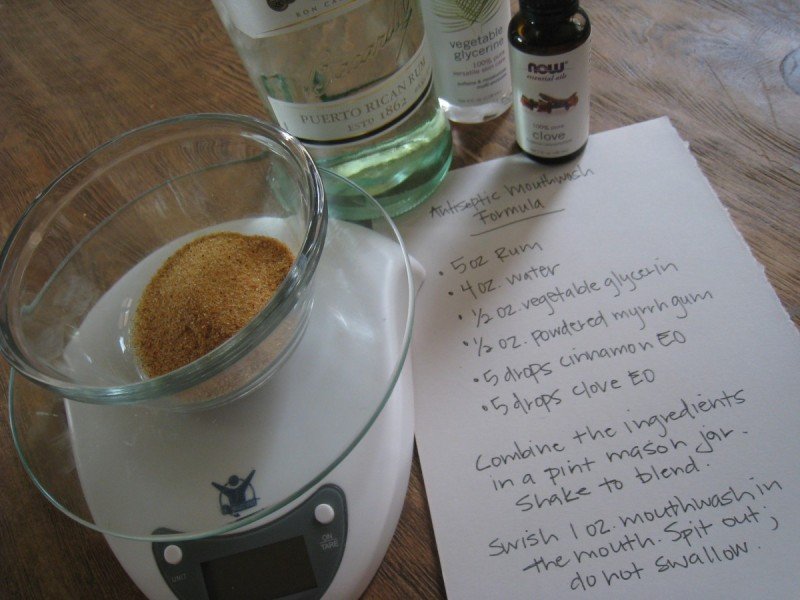
Gather the ingredients:
-5 ounces Rum or Vodka
-4 ounces water
-1/2 ounce vegetable glycerin
-1/2 ounce powdered myrrh gum
-5 drops essential oils of cinnamon
-5 drops essential oils of clove
Directions:
Combine all ingredients in a pint-sized glass mason jar.
Shake well to blend.
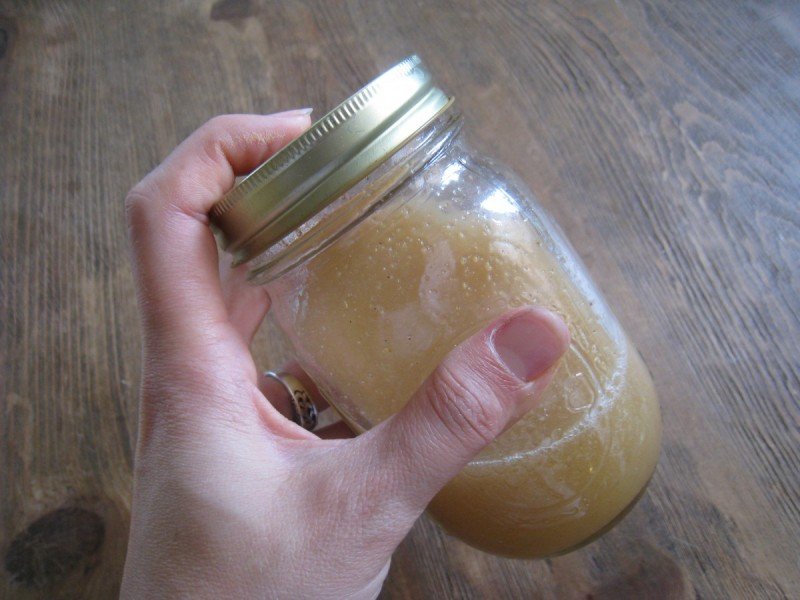
To use:
I do not recommend that you use this mouthwash daily — due to the alcohol content of this mixture, it can have a drying effect. Use of this solution may be better limited to times when a more antiseptic oral cleanse is desired. Shake well prior to use. Swish in mouth, then spit out. Will store in glass jar on bathroom counter indefinitely.
Notes
Myrrh gum has broad-spectrum antiseptic properties. It is also well known as an anti-inflammatory — excellent for use in treatment of oral ailments…namely gum disease.
Cinnamon contains many antimicrobial properties as well. It also functions as a natural preservative.
Essential oils of Clove can be used to heal and prevent cavities. It relieves the pain of a toothache. And it can also act to decrease oral infections because of its antiseptic properties.
Rum and Vodka kill bacteria and freshen breath.
Most of the ingredients can be found over-the-counter at a pharmacy. You can purchase powdered myrrh gum and the essential oils from Mountain Rose Herbs or The Bulk Herb Store.
What does your natural oral care routine look like? Please share it with us.
Please note: These are my own opinions derived from my own research. The statements made here have not been approved by the Food and Drug Administration or the American Dental Association. They are not intended to diagnose, treat or cure or prevent any disease.
Sunday, March 17, 2013
Growing Potatoes plus Recipe
We are getting ready to plant our potatoes next weekend. I found this great chart on FB for other novice farmers (like us). I am also including a low fat potato recipe from Eating Well Magazine.
(P.S. The typo on the chart is theirs not mine -- they must have gone to school with Dan Quayle)

http:://www.eatingwell.com/recipes/new_potatoes_green_beans.html
From EatingWell: March/April 2011
6 servings, about 3/4 cup each | Active Time: 15 minutes | Total Time: 40 minutes
1 1/2 Carbohydrate Serving
Exchanges: 1 starch, 1 vegetable, 1 fat
(P.S. The typo on the chart is theirs not mine -- they must have gone to school with Dan Quayle)

ROASTED POTATOES AND GREEN BEANS
 |
| Image from Eating Well Magazine |
http:://www.eatingwell.com/recipes/new_potatoes_green_beans.html
From EatingWell: March/April 2011
Whoever said potato salad needs to be cold? For this warm version, new potatoes are roasted right alongside green beans, then tossed in a tangy champagne vinegar and Gorgonzola dressing. If you like, you can toss in some baby arugula.
6 servings, about 3/4 cup each | Active Time: 15 minutes | Total Time: 40 minutes
Ingredients
- 1 1/2 pounds new or baby potatoes, scrubbed and cut in half
- 8 ounces green beans, trimmed
- 5 teaspoons extra-virgin olive oil, divided
- 1/2 teaspoon salt
- 1/4 teaspoon freshly ground pepper, plus more to taste
- 2 tablespoons champagne vinegar or white-wine vinegar
- 1 tablespoon Dijon mustard
- 3 tablespoons crumbled Gorgonzola or other blue cheese
- 2 tablespoons finely chopped scallion greens
Preparation
- Position rack in lower third of oven; preheat to 450°F.
- Toss potatoes and green beans in a large bowl with 2 teaspoons oil, salt and pepper. Spread evenly on a rimmed baking sheet. Roast, stirring once or twice, until the potatoes are tender and golden and the green beans are tender and browned in spots, 25 to 35 minutes.
- Whisk the remaining 3 teaspoons oil, vinegar and mustard in a large bowl. Stir in cheese and scallion greens.
- When the vegetables are done, toss with the dressing in the bowl. Serve warm.
Nutrition
Per serving :151 Calories; 5 g Fat; 1 g Sat; 3 g Mono; 3 mg Cholesterol; 23 g Carbohydrates; 4 g Protein; 3 g Fiber; 295 mg Sodium; 567 mg Potassium1 1/2 Carbohydrate Serving
Exchanges: 1 starch, 1 vegetable, 1 fat
Monday, March 4, 2013
How Apple Cider Vinegar Helps Your Body

Here are 10 reasons given by LiveFit Revolution for adding Apple Cider Vinegar (ACV) to your diet.
1. It is enormously helpful to your digestive system. The enzymes in the ACV help your body to break down the food you eat, which helps you get more nutrients out of it;
2. It helps your body eliminate, so if you’ve had problems with constipation, or even just a “slow system”, the ACV will help you have bowel movements more frequently and easily;
3. Full and frequent bowel movements also help our body detoxify, and the more we detox, the more weight our bodies will allow us to lose, and they’ll do it more quickly! We store toxins in our body fat, and our ability to burn fat will slow down if the body can’t eliminate the toxins quickly enough to keep a healthy balance. So ACV aids in weight loss;
4. ACV kills sugar cravings. If your body (or your brain!) is screaming for something sugary, an ACV drink will usually kill that craving;
5. It helps keep your blood sugars balanced, which means an increased ability to lose weight AND less simple-carb cravings. WebMD.com mentions studies that support the claim that ACV can help in this way with Diabetes;
6. One study found that obese people who consumed acetic acid (ACV) daily for 12 weeks experienced significant decreases in body weight, abdominal fat, waist circumference, and triglycerides;*
7. Triglycerides are a mechanism for storing unused calories, and their high concentration in blood correlates with the consumption of starchy and other high carbohydrate foods (Wikipedia). As ACV is said to reduce triglycerides, this means a reduction in our ability to store unused calories;
8. ACV is an acidic substance (more on this below), but when you ingest it, it becomes an alkalizer, which means it balances body pH by making you more alkaline. Research has shown that an alkaline diet fights cancer;
9. It supports healthy regeneration in your body. The evidence of this comes after a few months, when you’ll notice your hair and nails are both longer and a lot stronger. You’ll notice your skin looks even better too;
10. ACV is also said to reduce our “bad” (LDL) cholesterol.
“BUT I DON’T LIKE THE TASTE”
Some of us like ACV right away. Some of us find the flavor a challenge. As children, most of us didn’t like certain vegetables when we first tried them either, but sometimes it’s worth persevering for the sake of our health.
You can add a few drops of Stevia to your ACV; diluting it with more water can make it more palatable too. If you have a strong reaction to it (like an overly-active digestive system, too-soft stools, or nausea – especially when you drink it first thing in the morning), you might try cutting it down to one or two TEAspoons of ACV in 8oz water, and build up your tolerance. You can also add ground flax to your drink; the nuttiness of the flax goes well with the sharp apple flavor of the ACV.
Most people find that in a short time, they feel so good that they start to look forward to their ACV drinks, and develop a taste for it!
ACIDITY
ACV has a pH of 4.25 to 5.0 when it is undiluted. Since tap water usually has a pH of approximately 7.6, when you put a couple of tablespoons of ACV into 8oz water, it will be MUCH less acidic. It’s interesting to note that the ph of Coca Cola is 2.5, and 7-Up is 3.2, and since soda is consumed undiluted, it is FAR worse for your teeth than ACV could ever be.**
CAUTIONS
If you have sensitive teeth or are concerned about your enamel, you should consult your dentist. Some people choose to swish their mouth with a sip of plain water after drinking their ACV.
Also, ACV is high in Potassium, so if you take drugs such as Coumadin/Warfarin (for preventing blood clots) you should not take ACV.
And finally, people with some forms of inflammatory bowel disease (such as Crohn’s disease) should not take ACV. So if you do have health issues, you should consult your Doctor before adding ACV to your personal nutrition plan.
* Published in Bioscience, Biotechnology, and Biochemistry in 2009; full article here
**Softpedia.com – read their article on the acidity of soft drinks here
Tuesday, February 26, 2013
What are Adaptogens and Why Do You Need Them?
When I talk about my Isagenix products I point out that our Ionix Supreme and now our new e+ Natural Energy Shot contain adaptogens. Often I am asked, "What are adaptogens?" The word adaptogen is used by herbalists to refer to a natural herb product that increases the body's resistance to stresses such as trauma, anxiety and bodily fatigue. In the past they have been called rejuvenating herbs, qi tonics, rasayanas, or restoratives. Knowledge about adaptogens dates back thousands of years to ancient India and China, but serious scientific study did not begin until the late 1940s.
In 1947, Dr. Nikolai Lazarev defined an adaptogen as an agent that allows the body to counter adverse physical, chemical, or biological stressors by raising nonspecific resistance toward such stress, thus allowing the organism to "adapt" to the stressful circumstances. In short, adaptogens are plant and herbal extracts that help the body to "adapt" and normalize, creating an overall sense of well-being and balance.
In other words ... If you or your body are stressed
YOU NEED ADAPTOGENS!

Friday, December 14, 2012
Making Your Own Home-Made Coconut Oil Deodorant

It is no "secret" (get it???) that I love Trader Joe's Organic Virgin Coconut Oil for a great moisturizing body cream ... well add to my list ... Home-Made Organic Virgin Coconut Oil Deodorant!! Here are the recipes!!
Recipe 1- What You Need:
3 T Coconut Oil
3 T Baking Soda
2 T Shea Butter
2 T Arrowroot (optional)
Essential Oils (optional)
3 T Baking Soda
2 T Shea Butter
2 T Arrowroot (optional)
Essential Oils (optional)
What to do:
Melt shea butter and coconut oil in a double boiler over medium heat until barely melted. UPDATE: Combine in a quart size glass mason jar with a lid instead and place this in a small saucepan of water until melted. This will save your bowl and you can just designate this jar for these type of projects and not even need to wash it out…
Remove from heat and add baking soda and arrowroot (If you don’t have arrowroot, use more baking soda)
Mix well
Add essential oils and pour into a glass container for storage. It does not need to be stored in the fridge.
If you prefer, you can let it cool completely and put into an old deodorant stick for easier use, though it may melt in the summer!
If you don’t have all those ingredients around, or don’t want to wash a double boiler, this recipe is faster and easier:
Recipe 2- What you Need
6 T coconut oil
1/4 cup (4 T) baking soda
1/4 cup (4 T) arrowroot or cornstarch
essential oils (optional)
1/4 cup (4 T) baking soda
1/4 cup (4 T) arrowroot or cornstarch
essential oils (optional)
What to Do:
Mix baking soda and arrowroot together in a medium sized bowl.
Mash in coconut oil with a fork until well mixed.
Add oils if desired.
Store in small glass jar or old deodorant container for easy use.
Why Use Natural Deodorant?
I started this pursuit to avoid the alzheimers and breast cancer, but I’m a lifelong convert because it works! No, really! I was the girl who rejoiced when Secret Clinical Strength came out before prom one year. I’ve had to use regular deo a few times since I started the natural, and it doesn’t work as well. Although not an antiperspirant, it does seem to absorb a lot of wetness.
After a few weeks of using natural, I noticed an unexpected side effect… I wasn’t sweating as much to begin with. Months later, and I notice this even more!
I urge you to try making your own deodorant. Even if you aren’t daunted by the ingredients in your own deo, wouldn’t you feel better knowing you weren’t putting anything on your skin that you couldn’t eat (not that
Wednesday, November 28, 2012
University Study Finds Isagenix Superior to Leading “Heart Healthy” Diet
September 20, 2012 IsagenixHealth.net
 |
| Dr. Krista Varaday University of Illinois Chicago College of Applied Sciences |
Dr. Krista Varady discusses clinical research on Isagenix products.
The highly anticipated results are in—Isagenix products are superior to a leading “heart healthy” dietary plan for weight loss and visceral fat loss. The manuscript has been submitted to two peer-reviewed journals and is still under review; however, you can read more details about the study on our clinical research summary and marketing flyer.
Krista Varady, Ph.D., the lead investigator of the study, is a prolific researcher at the University of Illinois at Chicago’s College of Applied Sciences with more than 30 peer-reviewed research publications. She has a Ph.D. in nutrition from McGill University—one of the top universities in Canada. Dr. Varady has devoted much of her time to investigating the ability of weight-management strategies to decrease cardiovascular disease risk and is one of the pioneers in research on alternate-day and intermittent fasting.
Dr. Varady’s research was presented in August at the 10th annual Isagenix Celebration in Phoenix. Eager to share the exciting results, Dr. Varady answered questions from Isagenix Chief Science Officer Suk Cho, Ph.D.:
Q: What did you think when you tried Isagenix?
A: I always try things before I make my subjects do it. I used Isagenix for three weeks in January before we began the study. I didn’t want to lose a ton of weight, but I did want to see if I could lose a few pounds with it. The easy of use was great—no dishes at breakfast or lunch; you didn’t even need to have milk at home. I went out and bought a few shake products to compare it to and I’m not sure what you guys do, but the consistency is like a smoothie. The other shakes were clumpy and it made them less appealing.
Q: What else impressed you about Isagenix products?
A: I was impressed by the Cleanse Day and the high-protein IsaLean® Shake. All the ingredients actually seemed wholesome. I had thought the shake would be a high-sugar beverage, but I found it to be really nutritionally complete.
Q: What attracted you to collaborate with Isagenix on research using their products?
A: The main thing was that Isagenix incorporates fasting while on Cleanse Days. I find that really novel. If you look at other meal-replacement diets, they never really incorporate fasting or cleansing. Usually it is a shake for breakfast and a shake for lunch, but they don’t use all the other products Isagenix uses. I like that it is a multifaceted approach. You are also using supplements that may provide metabolic benefit and protect against free radicals—I thought that was really neat too, but the main thing was that there was a Cleanse Day every week because I am really interested in fasting research.
Q: What can you tell us about the study’s results?
A: Our main finding was that weight loss was actually greater in the Isagenix group. On average they lost 3.9 kg, so that works out to be around 9 pounds or so. Obviously, some lost more and some less, but the Isagenix group lost 3 pounds more on average than the other diet. We also saw those changes with fat mass. With Isagenix, we saw slightly greater reductions (although not significant) in fat mass. Neither group lost a significant amount of lean mass, which is great because you want to maintain your muscle mass to keep your metabolic rate higher and that allows you to burn more calories per hour.
Q: What are the results for visceral fat (fat that surrounds the organs)?
A: Even though it wasn’t statistically significant between groups, we found that there was a much greater reduction in visceral fat in the Isagenix group—about twice as much. They lost 0.7 kg, about 2 pounds. I find that amazing—they lost 2 pounds around their organs—that’s a lot!
Q: What other part of this study’s results do you find most exciting or intriguing?
A: What I found most intriguing at first was the adherence of the Isagenix group; they seemed to adhere better because of the convenience factor of the Isagenix system. Also, the Isagenix group lost more weight and more fat (especially visceral fat); and the blood chemistry looked wonderful.
Q: What other personal observations have you made about the Isagenix products and how they affect subjects?
A: Isagenix people just seemed happier. Also, the satiety (or fullness) aspect; people didn’t feel motivated to binge after a shake or cheat on the diet because they really did find those shakes quite filling, so I was pretty impressed with that. That is the main reason that I am even testing out these diets—to find diets that people will actually do and adhere to over the long term. They liked the taste of the shake and just in terms of the easiness too, they said small things like “there were less dishes to wash” and “for breakfast all you really have to do is keep the blender clean, there’s not that much prep involved and it is a portable system.” But those are actually really important things—if a diet is hard to do, people aren’t going to do it for very long. So making it easy, making it easy to clean up after—all those things add up for long term weight loss.
Q: You had some products left over after the study and people asked you for them, right?
A: Yeah, I had 3 boxes left of the shakes and I have never seen women diving in there, fighting with each other. They were all over each other. Those were gone pretty quickly after we opened them up!
Monday, October 29, 2012
Benefits of Body Brushing
 |
| Image from terawarner.com |
Your skin is your largest single organ within your body, and the one responsible for removing about a quarter of the toxins from your body daily. Because of this, it is the most important of all of your waste elimination organs!
The History of Dry Brushing:
In her article entitled “The Key Benefits of Dry Brushing and How to Do It,” Vanessa O’Neill explains that dry brushing is an ancient technique and aids the skin in the process of releasing and removing toxins from your body. Many cultures have historically practiced dry brushing. For example, the Japanese have traditionally used the dry brush techniques (or loofah) to vigorously brush their skin prior to taking a hot bath. In our own country, Comanche Indians traditionally used river sand to scrub their skin, and Cherokee Indians used dry corn cobs in order to enhance the strength and beauty of the skin.
Benefits of Dry Brushing:
There are many benefits of dry skin brushing. Dry skin brushing works to exfoliate dead skin cells, aids in stimulating circulation, assists the lymphatic system in removing toxins from the body, and promotes healthy, glowing skin. It is probably one of the simplest and most cost effective ways of promoting overall health and beauty available.
1. Dry brushing cleans the lymphatic system. The lymph system is an important part of our immune system because detoxification starts here. This system is made up of white blood cells (called lymphocytes) and interstitial fluid. The combination of the blood cells and interstitial fluid bathes our cells, removes cell waste and delivers nutrients to the cells.
2. Dry brushing strengthens the immune system. Dry skin brushing may reduce the duration of infections and accelerate the clearing of toxins. One example of the benefit is that the brushing helps support the immune system during cancer and other chronic illness treatments. By stimulating the lymph vessels to drain toxic mucoid matter into organs of detoxification we can purify the entire system. After several days of dry brushing, sometimes you may notice a gelatinous mucoid material in your stools. This is a normal sign that the intestinal tract is renewing itself.
3. Dry brushing stimulates the hormone and oil glands, which helps all of our body systems perform at peak efficiency. The skin is your body's largest organ. If your skin is not properly taken care of the process of eliminating toxins from your system fall on your kidneys. Daily brushing before you bathe or shower will keep your skin clean and rejuvenated. This daily routine allows blood to flow to the skin surface making it easier for the toxins to escape.
4. Dry Brushing tightens the skin by increasing the flow of blood. Believe it or not, dry skin is a sign of detoxification. With daily brushing, you are removing dead skin cells and revitalizing the skin and improving the skin texture and cell renewal. This process moves toxins and lessens the appearance of cellulite. Our bodies make a new top layer of skin every 24 hours. Skin brushing removes the old top layer, allowing the clean new layer to come to the surface, resulting in softer, smoother skin.
5. Dry Brushing tones the muscles. Hate doing free weights but still want to tone those muscles? Dry skin brushing helps to tone muscles by stimulating the nerve endings which causes the individual muscle fibers to activate and move. Brushing also helps mobilize fat and helps to even out the distribution of fat deposits.
6. Dry brushing stimulates circulation. I mentioned that brushing helps stimulate blood circulation earlier in this post, but did you know that your skin actually breathes? For most people, their pores are so clogged with dead skin cells and un-removed waste (which was excreted through perspiration), the toxins are unable to eliminate your body’s metabolic wastes. The increased blood flow to your skin will increase electromagnetic energy and you will feel more energized and invigorated.
7. Helps digestion. Dry skin brushing helps your skin to absorb nutrients by eliminating clogged pores. Healthy, breathing skin contributes to overall body health. When you brush, the pores of your skin open allowing your skin to absorb nutrients and eliminate toxins. Healthy, breathing skin contributes to overall body health.
How to Choose the Right Brush:
When choosing a body brush for dry skin brushing, you will want to choose a natural bristle brush because synthetic bristles can actually produce toxins themselves. Body brushes generally come in two different styles – ones that fit in the palm of your hands and ones with a handle on them. Sometimes you can find a palm brush that includes a handle to extend it. Body brushes with handles work well on the back of your body, but may be a little difficult to use in close in areas such as your feet. Choose the stiffest bristles you can stand. The stiffer the bristles are on your body brush, the better as you will be able to generate more lymphatic system stimulation. If your skin is really delicate currently, you may have to work your way up to a stiffer brush over time. Cactus body brushes are excellent for this technique and aids in stimulating circulation, assists the lymphatic system in removing toxins from the body, and promotes healthy, glowing skin. It is probably one of the simplest and most cost effective ways of promoting overall health available.
Dry Skin Brushing Technique:
 |
| Image from veggienook.com |
1. Always use brush strokes inward and upward toward your heart. Brushing towards the heart facilitates detoxification, while brushing away from the heart can adversely affect circulation in the blood vessels and lymph system.
2. Start with the bottom of your feet first. Acupuncturists tell us that the nerves in the soles of our feet are connected to every other area of your body. Include clockwise and counterclockwise strokes on the bottoms of your feet.
3. Move up from the feet to the legs, brushing up your torso. Start at the fingertips and move inwards towards your heart. When brushing the sensitive areas like your breast and neck, begin with gentle strokes and work up to stronger strokes as you become more accustomed to dry brushing. Use several clockwise strokes on the stomach, both sides of the chest, and your arm pits. Then repeat these areas with counterclockwise motions. You can also brush in a circular motion on the palms of your hands and soles of your feet. Concentrate on areas which suffer from dryness or cellulite, but avoid areas of broken skin or rashes.
Tips:
■Its best to sit or stand on a towel or in your tub to collect any dead skin from exfoliation.
■Do not wet yourself or the brush – this will stretch your skin and you will not get the same benefit.
■Wash your body brush after use to every few weeks and allow it to dry completely before using again.
■It is generally recommended to use dry brushing once or twice a day.
You can experiment to find a method of brushing that is comfortable to you
So now you know the facts. Keep up your dry brushing and you will assist your body in its detoxifying process, increase your circulation, and increase the natural beauty of your skin. Skin brushing is also notorious for increasing your energy level because of these effects.
Saturday, October 27, 2012
Why You Should Take an Epsom Salt Bath

I was reading some cleansing tips and one of the suggestions was to take Epsom salt baths. I had heard that Epsom salts were great for soaks when you sprain and ankle, but I began to wonder how they helped in the detoxing process.
According to the Epsom Salt Council, Epsom salts contain sulfates and the sulfates help to flush toxins and heavy metals from the cells. .
Our skin is a very porous membrane. If you add the right minerals to your bathwater, they trigger a process called reverse osmosis, which actually pulls salt out of your body, and harmful toxins along with it.
But how does it work? Imagine your body as a party with lots of people -- both those who were invited and those who weren't. When the party's over, usually at least some of those uninvited partygoers are still sticking around. It's late, and you're trying to figure out how to politely send them on their way. When you take an Epsom salt bath, those "uninvited" pollutants are told to leave your body. That message is delivered by none other than magnesium sulfate.
A little more about Magnesium Sulfate: Magnesium helps keep your bodily functions running smoothly, including some of the pathways that lead toxins right out of your body. Sulfate helps to strengthen the walls of your digestive tract so that it's easier to release toxins. As a compound, magnesium sulfate also raises the amount of digestive enzymes in the pancreas.
Epsom Salt Baths: If you're ready for an Epsom salt bath, consider your tub size and water depth before you begin pouring in the salt. More salt isn't necessarily better. The Epsom Salt Council suggests that a common formula is to add a cup or two (about 0.25 or 0.5 liters) of Epsom salt to warm water in a standard-size bathtub. If your bathtub is bigger or smaller than most, you may want to adjust the amount of Epsom salt you add.
The water you use in an Epsom salt bath -- and any bath, for that matter -- should be warm, not hot. Warm or tepid water is best for your skin because it doesn't strip away as much protective oil, and it helps to dissolve the Epsom salt. Before you climb into the bath, make sure that all of the salt has dissolved so that it can be more easily absorbed into your skin. Any salt that hasn't dissolved in the water may dry on your skin as an opaque white powder. If you see this residue on your skin after the bath, don't worry; excess salt should be harmless and is easily rinsed off.
The Epsom Salt Council recommends soaking in an Epsom salt bath for about 15 minutes up to three times per week.
Cautions and Contraindications: Despite the benefits, Epsom salt baths generally aren't recommended for people who have conditions such as heart problems, high blood pressure or diabetes. If you aren't sure whether an Epsom salt bath is safe for you, consult your doctor first.
Now … take some pamper time for yourself, draw a warm bath, swirl in some Epson salts, light some candles …. And relax!!

Thursday, October 18, 2012
Percentage of Body Fat Calculator

This is a great tool to figure out the percentage of body fat you are carrying. Even more exciting is watching how much body fat you are LOSING!!!!
About the Body Fat Calculator:
How much fat are you carrying? Find out if you are in the healthy range with this fat calculator. This tool provides: body fat percentage for women, body fat percentage for men. This body fat calculator is based on the body fat algorithms developed by the U.S. Navy, U.S. Army, U.S. Marine Corp and the YMCA.
Here is the information you will need to provide so the calculator can calculate your percentage of body fat:
Are you male or female?
Waist size at narrowest point: inches
Waist size at your navel: inches
Hip size at widest point: inches
Neck at narrowest point: inches
Select your height: feet and inches
What is your weight? lbs
How much fat are you carrying? Find out if you are in the healthy range with this fat calculator. This tool provides: body fat percentage for women, body fat percentage for men. This calculator is based on the YMCA formula.
Information you will need for the short version calculator:
Are you male or female?
What is your waist size? Inches
What is your weight? lbs
Friday, September 21, 2012
How to Identify GMO Produce at Your Grocery Store

As a follow up to my article from yesterday (Why Should You Be Concerned About GMO Produced Crops ), I wanted to add a handy guide for identifying GMO, conventionally grown and organically grown fruits and vegetables.
You have probably noticed the little sticker or stamp on the produce in the grocery store. Those are called PLU codes (Price Look Up codes). The codes are used for input into electronic cash registers to determine prices for bulk items, such as apples and cabbage. The codes identify exactly what the item is with its current pricing, while giving the consumer a handy tag for identifying GMO produce.
Each PLU code has five digits. If the first digit is a 9, the item is organic. If it is an 8, it is GMO! Conventionally grown produce has a 0 for the first digit, but usually the 0 is dropped. So most conventionally grown produce will actually have only 4 digits on the PLU tag if you don't see a 0 at the beginning. The 8 gives you the worst of two worlds, GMO and heavy chemical spraying!
I have also noticed that if the produce doesn’t have the sticker attached, the code can be found on the signage above the produce identifying the product and the price.
Obviously, buying organic from local farmers is ideal. Buy bulk and pass up packaged foods. If you buy locally, through a local health food store or at a farmers' market, you can determine by direct communication how the crops were raised. In our town, Market of Choice actually identifies the local farm that grows the produce they are selling in their store.
I love to grow my own greens and tomatoes. They are simple to grow both inside and out. You can have a fresh, “clean” salad in minutes. Plus, in my opinion, nothing tastes better than home grown food!!
Thursday, September 20, 2012
Why Should You Be Concerned About GMO Produced Crops?
 |
| Image from polyp.org.uk |
This is an excerpt of an article I received from www.naturalnews.com. I feel it is an important issue that I know many of you are also concerned about – GMO (genetically modified organisms) grown crops. Monsanto created DDT, PCBs, Agent Orange, marketed aspartame, and created bovine growth hormone (rBGH) to infect milking cows that put pus into commercial milk.
So far, GMOs have invaded soy, corn, beets (for beet sugar), cotton, and alfalfa agriculture. Many GMO edibles are contained surreptitiously in a wide variety of processed foods, while GMO corn and soy are used by unnatural factory farm feed lots.
GMOs damage crops, the environment, and the food chain. NaturalNews has written several articles describing GMOs' inherent human and animal health hazards as well as crop and environmental dangers (http://www.naturalnews.com/GMO.html). They create sterility and birth defects among animals and humans. Most of the honey bee die-off, or colony collapse, is attributed to glyphosates. If enough pollinating bees disappear, our food chain is endangered further.
Why you should be concerned?
“Maybe the reasons summarized above are too abstract. So let's get personal. Contrary to mainstream media's (MSM) outlook, the jury is not out on GMOs. GMOs do destroy human and animal health while endangering non-GMO crops with contamination. That's been discovered by several scientists acting independently.
“They jeopardize their careers and even their lives by communicating what they find while the MSM ignores them. Anti-GMO activist and author Jeffrey Smith lists the casualties and summarizes Monsanto's harassment here: (http://www.sott.net)
“Agro-ecologist Don Lotter, Ph.D. released an inside scoop when he stated:
“’The promoter gene used ... [the] cauliflower mosaic virus, ... [was assumed to be] denatured in our digestive system, but it's not. It has been shown to promote the transfer of transgenes from GM foods to the bacteria within our digestive system, which are responsible for 80 percent of our immune system function.’”
Sources for this article include:
http://www.youtube.com/watch?v=Lni6OAJz3sk&feature=player_profilepage
http://www.naturalnews.com/031825_GMOs_threat.html
http://www.organicconsumers.org/articles/article_19468.cfm
http://rense.com/general33/fd.htm
http://www.gene.ch/info4action/2000/Feb/msg00028.html
http://www.naturalnews.com/033804_Scientists_Under_Attack_GMOs.html
http://www.naturalnews.com/031825_GMOs_threat.html
http://www.organicconsumers.org/articles/article_19468.cfm
http://rense.com/general33/fd.htm
http://www.gene.ch/info4action/2000/Feb/msg00028.html
http://www.naturalnews.com/033804_Scientists_Under_Attack_GMOs.html
Wednesday, September 12, 2012
Eat Your H20!
Posted by: Rachel Beller MS, RDBiggest Loser Nutritionist
Hydrating and scoring antioxidants can be a one-shot deal!

Wednesday, September 5, 2012
Thinking About It Diet!!!

Okay ... this does it .... I am off the "ThinkAboutItDiet" and starting the "DoingItDiet!!!"
Join Me .... log onto
www.thehealthyhelms.com
Join Me .... log onto
www.thehealthyhelms.com
Saturday, September 1, 2012
Belly Fat Worse for Your Heart Than Obesity

Belly fat worse for your heart than obesity, study suggests
From http://todayhealth.today.com/_news/2012/08/27/13508211-belly-fat-worse-for-your-heart-than-obesity-study-suggests?lite
People who are normal weight but carry extra fat around their belly have a higher risk of dying from heart disease than obese people, a new study suggests.
The findings add to a growing body of research that so-called visceral fat, or fat around the organs of the abdomen, is particularly bad for health.
“Our research shows that if a person has a normal BMI, this by itself should not reassure them that their risk for heart disease is low. Where their fat is distributed on their body can mean a lot," said study researcher Dr. Francisco Lopez-Jimenez, a cardiologist at the Mayo Clinic in Rochester, Minn.
The study involved 12,785 U.S. adults who participated in a national survey and were followed for an average of 14 years. During that time, 2,562 participants died, including 1,138 from heart disease.
Researchers classified the study participants as normal weight if their body mass index (BMI) was between 18.5 and 24.9, overweight if their body mass index was 25 to 29.9 and obese if their body mass index was above 30. The amount of weight they carried around their waist was determined by their waist-to-hip ratio.
Participants were divided into six groups based on which of the three BMI groups they fell into, and whether they had a normal or high waist-to-hip ratio. Men whose waist measurement was 90 percent or more of their hip measurement were considered to have a high hip-to-waist ratio. The same was true of women; those with waists that were 85 percent of their hip size were classified as having a high hip-to-waist ratio.
Participants with normal BMI but a high waist-to-hip ratio had the risk of dying of cardiovascular disease, and the highest risk of dying from any causes among the six groups.
The risk of cardiovascular death was 2.75 times higher, and the risk of death from any cause was 2.08 times higher among normal-weight people with "central obesity," compared with normal-weight people who had a normal waist-to-hip ratio.
"The high risk of death may be related to a higher visceral fat accumulation in this group, which is associated with insulin resistance and other risk factors," said study researcher Dr. Karine Sahakyan, also of Mayo Clinic.
The study was presented Aug. 27 at the European Society of Cardiology meeting in Munich.
Thursday, August 30, 2012
Exercise for Fat Loss

Article by Dr. Michael Colgan of the Colgan Institute:
If you are exercising to lose body fat, you have to be concerned you have too much of it. For many folk that much has taken years to establish. Some have solidified the same, 20, 30, 40 lbs, year after year by yo-yo dieting. It’s not easy to change a body that has got into such a state, but if you follow the rules it works like a charm.
People who don’t like rules may want to just get their head down and bull it out. Boot camps love these folk, telling them “You just have to work your butt off at our level and you will lose the fat.” The science says, “No way”. Others read some social buzz that whole neighbourhoods lost masses of fat by getting together and running (biking, mud-wrestling, swimming in holes in the ice). Not going to work.
Anyone who has run a marathon, an extreme 3-4 hour effort for most of us, knows with disgust they lost negligible body fat doing it. Having measured runners in quite a few marathons, an average person well trained to run a marathon, is lucky to lose a quarter pound of fat. Some folk who stuff with carbs during a marathon, actually gain fat. They may feel like hell at the finish, and be 7 lbs lighter in water weight, because the carbs prevent water absorption from the gut, but their belly rebounds and then some within 24 hours.
One controlled study representative of the science, measured body fat losses accurately in groups of men and women over the whole 20-week training program for a half-marathon. In 20 weeks of fairly intense endurance exercise (80 workouts), the men lost an average of 5.3 lbs of fat. That’s just 4.25 ounces per week of exercise. The women lost an average of only 2.0 lbs. That’s a measly 1.6 ounces of fat loss per week of exercise.(1)
This negligible loss of body fat with exercise is the usual result, and often gives folk the false belief they are different from everyone else, and just can’t get slim. Yes you can. All you need is the right nutrition and exercise. It’s not rocket science. Here are eight exercise rules to get you started on the right track. Stated briefly, with just a major reference or two, they are grounded in a lot of recent science that I will be covering in future articles. You need to follow them all to get sterling results.
Exercise for Fat Loss-Rule 1
Get 8 hours sleep a night. The US National Center on Sleep Disorders reports that approximately 90 million Americans currently do not get sound sleep.(2) Children sleep better, so it’s a one in three bet that you have sleep disturbance. If you are overweight, it’s 50/50 that you have poor sleep. Sound sleep is an essential physiological restorative process that programs one-third of your life, and controls much of what happens in the other two-thirds.(3) To cut to the chase, without sound sleep, you cannot effectively exercise or effectively lose body fat. Visceral fat gain, food cravings, insulin disruption, fatigue, your whole hormone cascade, the metabolic syndrome, and many other bodily disorders are driven by disruption of your circadian rhythm.(4) Get your sleep fixed first or you will be unable to effectively exercise or lose fat.
Exercise for Fat Loss- Rule 2
Exercise on waking to raise your metabolic rate for the whole day. When you wake in the morning, your metabolism is sluggish. Your metabolic rate for the day is then determined by what you do. If you have a lazy day off for example, your metabolic rate will remain low throughout, and you will be on maximum calorie retention from anything you eat. If, however, you exercise on waking, even if it is only a 30 minute walk, it raises your metabolic rate immediately. The rate then remains high for most of the day, and you lower your calorie retention from food. Get in the habit. Do that smidgeon of exercise every day.
Exercise for Fat Loss- Rule 3
Exercise on an empty stomach. Your body takes the easiest route to energy. If you eat before exercise, or start at the juice bar with a smoothie at the gym, your body will use the calories in your gut preferentially to using bodyfat for fuel. A single small “all fruit” smoothie will eliminate any weight loss effect of an hour of exercise after it. And, drinking “energy drinks” while working out is just plain dumb if you want to achieve fat loss. It’s just plain dumb for any exercise goal.(5)
Exercise for fat Loss- Rule 4
Do 20-30 minutes of light aerobic exercise before your workout. When you begin exercising, your body uses mainly sugar for fuel, the glycogen in your muscles, sugar made by gluconeogenesis in the liver, and sugar from food in your gut. (Remember, no eating before exercise) To achieve your goal of using body fat for fuel, you first have to induce hormonal changes to switch to greater fat oxidation. You can do this with light aerobic exercise for 20-30 minutes, such as walking to the gym. You cannot achieve these complex changes by lumbering on the treadmill, as I see some folk do, because, as soon as you begin to pant, signaling a shortage of oxygen, you keep the body stuck in sugar burning mode. A whole workout done with great effort, treadmilling wildly, then rushing from station to station for an hour, uses near zero bodyfat, and exhausts you into the bargain, as it empties the muscles of glycogen. It’s tragic but somehow comical to see people doing this week after week, and losing no fat at all.
Exercise for Fat Loss- Rule 5
Do your workout in the “Fat Burning Zone”. There is much nonsense written about the fat burning zone, as if it’s some magical state that melts fat. It is just a range of exercise intensity where fat use (fat oxidation) settles into a high steady level. Studies have measured this range in all sorts of complex ways involving VO2max and weird and wonderful equations. It also varies somewhat with the individual, and how much exercise you do, and how often. But I can state it pretty simply.
The fat burning zone is exercise done at 60-70% of your maximum heart rate. If you run at maximum on the treadmill, and get your highest heart rate at 170 beats per minute, then your fat burning zone is 60-70% of that score, that is, about 100-120 beats per minute. At this level of exercise you can still carry on a normal conversation.
First, do your 20-30 minute warm up in the fat burning zone to make the hormonal changes to trigger a higher proportion of fat burning. Then, for a one-hour workout on an empty stomach, keep your heart rate within the same range. Your body will then pull approximately 50% of its energy from body fat. That’s about as good as you can get.
Above or below this range, your body’s use of sugar increases, and it pulls only 20 -30% of its energy from body fat. So, it makes sense to wear a heart rate monitor, and set your fat burning range so that it beeps you automatically if you move out of it.
Exercise for Fat Loss- Rule 6
Build muscle to lose fat. All the gym programs I have seen that concentrate on aerobic exercise have been a failure for fat loss. We measured one aerobics group for a year at Frogs Gym in San Diego. All of the women in the group wanted to lose weight. They actually gained an average of 2.9 lbs of fat while doing an average of three aerobics sessions a week for 12 months.The best form of exercise for fat loss is resistance training that adds muscle to your body. Muscle is moving tissue, fat is not. Over 100 muscles are constantly active just to keep you standing up, and about 200 are merrily using energy just to maintain their tone. Fat hangs limp like jello. Muscle is the engine that uses body fat for fuel. With more muscle, more fat is burned 24 hours a day, even just couch sitting with heavy breathing. In her book Strong Women Stay Slim, Miriam Nelson, a Tufts University researcher, followed a group of women who did a weight loss diet plus resistance training. They lost 44% more fat than those who followed the diet alone. So, put resistance training at the top of your list.
Exercise for Fat Loss Rule 7
Do weight training that makes you taller and more flexible. We have seen it many times, especially with women. They embrace resistance training in order to lose fat, then do all the wrong stuff. Often they hire trainers who give them bodybuilding exercises, or worse, uni-planar exercises guided by machines with comfy seats, exercises that bear no relation to movements in life. They often turn the posture into a muscle-thickened crouch. Though they can achieve lower body fat because of muscle growth, the unfortunate girls look shorter and fatter.
One example I saw recently. Under a trainer’s direction, a somewhat overweight girl was vigorously doing deadlifts with a bar and two 45lb weights, 135lbs, about her own weight. Each time she lifted the bar you could see her stomach stick out. She did not realize she was training hard to grow a stuck out gut.
Also, the heavy weight was pulling her shoulders down and forward, shortening and thickening the muscle connections from the arms to the pectoralis major of the chest. It was growing round shoulders with dumpy arms, about the worst training you can think of for most women, who usually aim to be upright, slim, and elegant.
Another thing this girl didn’t realise was, if you lift your own body weight from the floor, it immediately compresses your spine and makes you temporarily about an inch shorter. Over a long period, the erector spinae muscles that hold up the spine becomes shorter from that form of training. Bulging stomach, forward-sloping shoulders, dumpy arms, and a shortened spine. Not exactly what most folk want from a weight program to lose fat.
The best resistance training for fat loss (and muscle gain) is free-movement exercises, done standing, exercises that lengthen the spine while contracting the muscles. Overhead cables like we use in the Colgan Power Program are best as they can simulate virtually any free movement in life. The Program was first developed for Olympic athletes at Colorado Springs, so you can bet it’s first class for making people muscular and strong. But it also trains long, lean, flexible muscles. And more than 100 different exercises in it lengthen the spine while contracting the muscles. That should be your aim, a tall, elegant, flexible body that emphasizes the low body fat you have worked so hard in the kitchen to achieve.
Exercise for Fat Loss Rule 8
Get a mentor. You can go it alone, but a mentor adds immensely to any program for any skill. To achieve a great body you need someone who is an example, someone who has the skills, someone who can calm your wavering doubts and unerringly guide you in your quest.
In my article The Making of Genius, 2005, which has been reprinted and copied innumerable times worldwide, I analysed the components that have produced genius in science, music, and arts. One vital component is the mentors that most geniuses had to develop them throughout their lives. These mentors were all experts in the different fields in which the individuals wanted to excel. They were all folk who had already been there, and had learned to excel at the skills.
Your goal of a great body for life is a difficult one. Most people who try fail repeatedly. You need a personal mentor. What Isagenix offers that no one else can, is hundreds of members who have done what you want to do, and who are on the same lifelong journey, walking the same good talk.
1. Meijer GA, et al. Body composition and sleeping metabolic rate in response to a 5-month endurance-training programme in adults. Eur J Appl Physiol Occup Physiol. 1991;62(1):18-21.2. US National Center on Sleep Disorders.http://www.nhlbi.nih.gov/about/ncsdr/index.htm. Accessed 15 July 2012.3. Aldabal L, Bahammam AS. Metabolic, endocrine, and immune consequences of sleep deprivation. Open Respir Med J. 2011;5:31-43.4. Maury E, et al. Circadian rhythms and metabolic syndrome: from experimental genetics to human disease. Circ Res. 2010 February 19;106(3): 447–462.5. Van Proeyen K, et al. Beneficial metabolic adaptations due to endurance exercise training in the fasted state. J Appl Physiol. 2011 January; 110(1):236–245.
Kjersti Kote add a 9th Rule:
Use Isagenix to fuel your body after your workouts! I recently interviewed Dr. Colgan and he said the best time to bring a shake into your body is exactly 30 minutes (not 1 hour or 2 hours) after your workouts. This will assist in leam muscle developement and recovery!
Subscribe to:
Posts (Atom)