About Me

My photo
Former teacher, clinical social worker and now entrepreneur. My focus, no matter what career I am engaged in, has been on helping people. Now I am on an incredible journey to change life in a leaner, cleaner, greener way. I hope you will join me in this transition.
Showing posts with label exercise. Show all posts

Tuesday, July 24, 2018

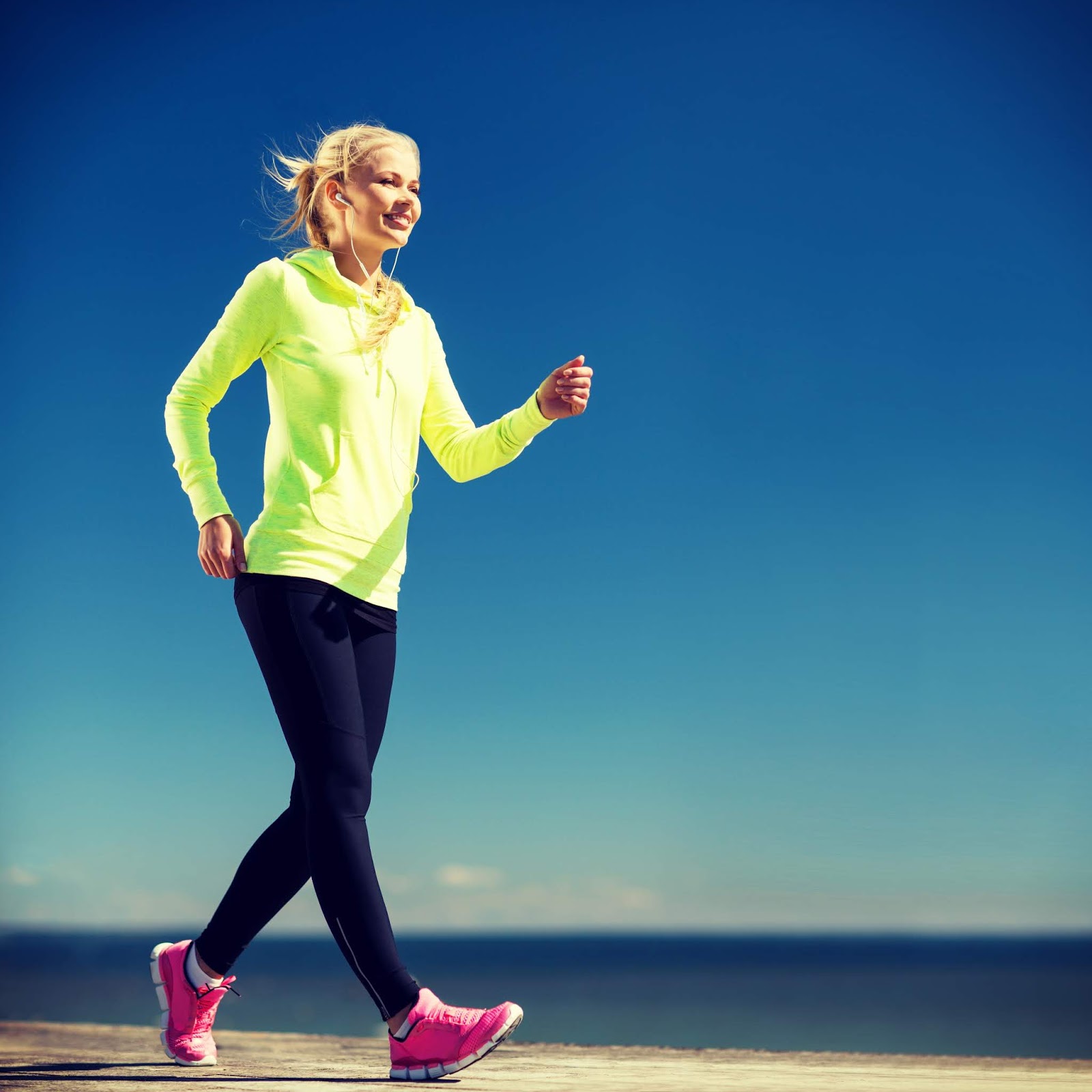
Day 17: Let’s Take a Walk: Quick Tips for A Good Walk


You’ve been walking since you were a baby.  Would you be surprised to find out you might not be doing it correctly?  Now that I am walking more, I noticed that by the end of my walk my back and legs felt fatigued.  A friend gave me a list of guidelines for proper posture and techniques to improve my walking sessions.  Since I have been following these guidelines I feel like I have a lot more energy during and after my walks.  

Lengthen Your Spine
Imagine a string attached to a balloon which is attached to the top of your head and being pulled upward, making you as tall as you can be. While you are on your walk do not lean forward (from the waist) because you could be putting a strain on your back causing fatigue or possible injury.

Keep Your Chin Up
I have a habit of looking down at the ground when I am walking.  The guidelines say to look up, chin parallel to the ground, while you’re walking which will result in less neck and back pain. 


Take Natural Strides

Don’t “push” your steps.  Instead keep your strides as natural as possible.  Taking longer than natural steps could cause an injury.  Move with a fluid, comfortable stride.
Have Fun
Make your walk a bright part of your day.  It is a fantastic exercise (especially if you are just getting back into exercise like me!!).  A walk can lift your spirits and bring you joy at the same time you are getting fit.  When I walk, I take in the beauty around me.  It is also a terrific time for me to meditate or repeat my affirmations.  Often I use the time to sort out a project or a problem I am working on.  I love walking in the evening with my husband.  We do a lot of "future planning" on our walks. 
P.S.  Leave your phone at home!!!

Walking is a wonderful exercise … Incorporate it into your day … Make it a Habit

Daily Stats:
Start Day 1:      Wt: 235.0    Bl. Glucose: 130    Bl. Pressure: 140/79
Today Day 17:  Wt: 221.6    Bl. Glucose: 77      Bl. Pressure: 134/70

Wednesday, July 18, 2018

Day: 8: Fred Flintstone Feet Relief

Hi!!  I'm finally able to post!!  The date for the first post was supposed to be 7/8/2018, but I had a little trouble getting it posted until today!

I am excited.  I have made some great progress since I started my new Challenge.  I started this Challenge weighing 235 pounds.  That is 100 pounds less than my top weight of 335+.  Today I weighed in at 225.9.  That is amazing!!  I have to admit though, that some of that loss is water weight.  My feet and legs have been so swollen up with edema (water retention) that from the knees down I looked like Fred Flintstone!!!  

I found two great solutions for water retention.  The first is to drink lots of green tea.  It acts as a diuretic and reduces the fluid trapped in the tissue of my legs and feet.  The swelling is definitely going down!! 


The second solution is this simple exercise: 


1,  Sit on the floor, facing a wall.  Lay back and slide your "behind" right up to the wall with your legs extended up the wall at a 45-degree angle from your torso.


2.  Put a soft roller or a pillow under the arch of your back.  Keep your legs straight and relax your arms and shoulders.  Hold this position for 20 minutes.

3.  As always, check with your doctor if you have problems with your back or legs before starting this exercise.

Lifting your legs like this everyday helps with the swelling in your legs and feet by getting your blood to circulate through your body and moving the fluid from your lower extremities.  There are other benefits from this simple exercise.  To learn what they are,  just watch this little clip from Bright Side.
The second solution here:  https://www.facebook.com/brightside.mini/videos/494889230941437/?t=46

Since I wasn't able to get this posted until today … I will give the stats for the past few days below:

DAILY STATS:

July 8th (Start):          Wt: 235.0    Blood Glucose: 130

July 15th:                     Wt:  233.8   Blood Glucose: 123
July 16th:                     Wt: 230:4    Blood Glucose: 119
July 17th:                     Wt: 228.1    Blood Glucose: 85
July 18th (Today):     Wt: 225.9     Blood Glucose: 89  
       
Difference:  9.1 pounds


Thursday, October 18, 2012

Percentage of Body Fat Calculator

This is a great tool to figure out the percentage of body fat you are carrying.  Even more exciting is watching how much body fat you are LOSING!!!!
About the Body Fat Calculator:
How much fat are you carrying? Find out if you are in the healthy range with this fat calculator. This tool provides: body fat percentage for women, body fat percentage for men. This body fat calculator is based on the body fat algorithms developed by the U.S. Navy, U.S. Army, U.S. Marine Corp and the YMCA.
Here is the information you will need to provide so the calculator can calculate your percentage of body fat:
Are you male or female? 
Waist size at narrowest point:  inches
Waist size at your navel:  inches
Hip size at widest point:  inches
Neck at narrowest point:  inches
Select your height: feet and inches
What is your weight?  lbs

SHORT VERSION BODY FAT CALCULATOR: http://www.healthstatus.com/calculate/bfc
How much fat are you carrying? Find out if you are in the healthy range with this fat calculator. This tool provides: body fat percentage for women, body fat percentage for men. This calculator is based on the YMCA formula.
Information you will need for the short version calculator:
Are you male or female?
What is your waist size? Inches
What is your weight? lbs

Wednesday, September 5, 2012

Exercises for People with Bad Knees

My friends know that my knees are really bad.  In fact, they are bone-on-bone, so doing most exercises is very difficult for me.  I found this article by Maura Banar on www.livestrong.com that offers several suggestions for people like me who have bad knees.  I am getting started this week.  I’ll let you know how it turns out.
Step 1
Swim at least 3 days a week for 30 to 45 minutes. Swimming is one of the best aerobic exercises you can do with no impact on your knees. Swimming also provides resistance training, which strengthens the muscles surrounding the knees. If possible, swim in moderately warm water so that your muscles aren't prone to injury from sudden movement while contracted from cold water. Warm up with light stretching in the water before swimming and avoid the butterfly stroke, which can make knee pain and injury worse.
Step 2
Ride a stationary or regular bicycle for 30 to 45 minutes at least 4 days a week. Cycling doesn't cause impact, but it does provide resistance, especially on hills. Keep this in mind when cycling and consult with your physical therapist or fitness professional to determine the appropriate amount of resistance for your knee condition. Recumbent bicycles are also great for even less resistance on the knees and lower back and can be used outdoors or in your local gym.
Step 3
Use an elliptical machine, either at the gym or at home. Elliptical machines exercise both the upper and lower body, with resistance rather than impact. The benefit of using the elliptical is that you can choose to use your arms more to control the movement, rather than completely relying on your legs. If you can only use your legs for short periods of time, the elliptical may be right for you. In addition, you can increase the incline of the elliptical machine, which increases the amount of resistance, if necessary.
Step 4
Exercise your upper body. Lift weights, use fitness machines at the gym or resistance bands at home. You can strengthen your upper body and build muscle mass and burn fat, all without using your knees. Do at least five different exercises of 8 to 12 repetitions. For aerobic benefit, rest for 30 to 45 seconds between sets. This is also known as "interval training" and is an effective way to stay in good cardiovascular shape without aggravating your knees. For aerobic benefit and weight loss, aim to keep your heart at 50 to 75 percent of its target rate during the workout. Be sure to warm up and cool down for 15 minutes before and after your upper-body training.
Read more: http://www.livestrong.com/article/205185-how-to-exercise-with-bad-knees-to-lose-weight/#ixzz25fL88AVo

Thinking About It Diet!!!


Okay ... this does it .... I am off the "ThinkAboutItDiet" and starting the "DoingItDiet!!!"

Join Me .... log onto
www.thehealthyhelms.com

Saturday, September 1, 2012

Belly Fat Worse for Your Heart Than Obesity

Belly fat worse for your heart than obesity, study suggests

From http://todayhealth.today.com/_news/2012/08/27/13508211-belly-fat-worse-for-your-heart-than-obesity-study-suggests?lite

People who are normal weight but carry extra fat around their belly have a higher risk of dying from heart disease than obese people, a new study suggests.
The findings add to a growing body of research that so-called visceral fat, or fat around the organs of the abdomen, is particularly bad for health.
“Our research shows that if a person has a normal BMI, this by itself should not reassure them that their risk for heart disease is low. Where their fat is distributed on their body can mean a lot," said study researcher Dr. Francisco Lopez-Jimenez, a cardiologist at the Mayo Clinic in Rochester, Minn.
The study involved 12,785 U.S. adults who participated in a national survey and were followed for an average of 14 years. During that time, 2,562 participants died, including 1,138 from heart disease.
Researchers classified the study participants as normal weight if their body mass index (BMI) was between 18.5 and 24.9, overweight if their body mass index was 25 to 29.9 and obese if their body mass index was above 30. The amount of weight they carried around their waist was determined by their waist-to-hip ratio.
Participants were divided into six groups based on which of the three BMI groups they fell into, and whether they had a normal or high waist-to-hip ratio. Men whose waist measurement was 90 percent or more of their hip measurement were considered to have a high hip-to-waist ratio. The same was true of women; those with waists that were 85 percent of their hip size were classified as having a high hip-to-waist ratio.
Participants with normal BMI but a high waist-to-hip ratio had the risk of dying of cardiovascular disease, and the highest risk of dying from any causes among the six groups.
The risk of cardiovascular death was 2.75 times higher, and the risk of death from any cause was 2.08 times higher among normal-weight people with "central obesity," compared with normal-weight people who had a normal waist-to-hip ratio.
"The high risk of death may be related to a higher visceral fat accumulation in this group, which is associated with insulin resistance and other risk factors," said study researcher Dr. Karine Sahakyan, also of Mayo Clinic.
The study was presented Aug. 27 at the European Society of Cardiology meeting in Munich.

Thursday, August 30, 2012

Exercise for Fat Loss

Article by Dr. Michael Colgan of the Colgan Institute:
If you are exercising to lose body fat, you have to be concerned you have too much of it. For many folk that much has taken years to establish. Some have solidified the same, 20, 30, 40 lbs, year after year by yo-yo dieting. It’s not easy to change a body that has got into such a state, but if you follow the rules it works like a charm.
People who don’t like rules may want to just get their head down and bull it out. Boot camps love these folk, telling them “You just have to work your butt off at our level and you will lose the fat.” The science says, “No way”. Others read some social buzz that whole neighbourhoods lost masses of fat by getting together and running (biking, mud-wrestling, swimming in holes in the ice). Not going to work.
Anyone who has run a marathon, an extreme 3-4 hour effort for most of us, knows with disgust they lost negligible body fat doing it. Having measured runners in quite a few marathons, an average person well trained to run a marathon, is lucky to lose a quarter pound of fat. Some folk who stuff with carbs during a marathon, actually gain fat. They may feel like hell at the finish, and be 7 lbs lighter in water weight, because the carbs prevent water absorption from the gut, but their belly rebounds and then some within 24 hours.
One controlled study representative of the science, measured body fat losses accurately in groups of men and women over the whole 20-week training program for a half-marathon. In 20 weeks of fairly intense endurance exercise (80 workouts), the men lost an average of 5.3 lbs of fat. That’s just 4.25 ounces per week of exercise. The women lost an average of only 2.0 lbs. That’s a measly 1.6 ounces of fat loss per week of exercise.(1) 
This negligible loss of body fat with exercise is the usual result, and often gives folk the false belief they are different from everyone else, and just can’t get slim. Yes you can. All you need is the right nutrition and exercise. It’s not rocket science. Here are eight exercise rules to get you started on the right track. Stated briefly, with just a major reference or two, they are grounded in a lot of recent science that I will be covering in future articles. You need to follow them all to get sterling results.

Exercise for Fat Loss-Rule 1 
Get 8 hours sleep a night. The US National Center on Sleep Disorders reports that approximately 90 million Americans currently do not get sound sleep.(2) Children sleep better, so it’s a one in three bet that you have sleep disturbance. If you are overweight, it’s 50/50 that you have poor sleep. Sound sleep is an essential physiological restorative process that programs one-third of your life, and controls much of what happens in the other two-thirds.(3) To cut to the chase, without sound sleep, you cannot effectively exercise or effectively lose body fat. Visceral fat gain, food cravings, insulin disruption, fatigue, your whole hormone cascade, the metabolic syndrome, and many other bodily disorders are driven by disruption of your circadian rhythm.(4) Get your sleep fixed first or you will be unable to effectively exercise or lose fat.
Exercise for Fat Loss- Rule 2 
Exercise on waking to raise your metabolic rate for the whole day. When you wake in the morning, your metabolism is sluggish. Your metabolic rate for the day is then determined by what you do. If you have a lazy day off for example, your metabolic rate will remain low throughout, and you will be on maximum calorie retention from anything you eat. If, however, you exercise on waking, even if it is only a 30 minute walk, it raises your metabolic rate immediately. The rate then remains high for most of the day, and you lower your calorie retention from food. Get in the habit. Do that smidgeon of exercise every day.
Exercise for Fat Loss- Rule 3
Exercise on an empty stomach. Your body takes the easiest route to energy. If you eat before exercise, or start at the juice bar with a smoothie at the gym, your body will use the calories in your gut preferentially to using bodyfat for fuel. A single small “all fruit” smoothie will eliminate any weight loss effect of an hour of exercise after it. And, drinking “energy drinks” while working out is just plain dumb if you want to achieve fat loss. It’s just plain dumb for any exercise goal.(5)
Exercise for fat Loss- Rule 4
Do 20-30 minutes of light aerobic exercise before your workout. When you begin exercising, your body uses mainly sugar for fuel, the glycogen in your muscles, sugar made by gluconeogenesis in the liver, and sugar from food in your gut. (Remember, no eating before exercise) To achieve your goal of using body fat for fuel, you first have to induce hormonal changes to switch to greater fat oxidation. You can do this with light aerobic exercise for 20-30 minutes, such as walking to the gym. You cannot achieve these complex changes by lumbering on the treadmill, as I see some folk do, because, as soon as you begin to pant, signaling a shortage of oxygen, you keep the body stuck in sugar burning mode. A whole workout done with great effort, treadmilling wildly, then rushing from station to station for an hour, uses near zero bodyfat, and exhausts you into the bargain, as it empties the muscles of glycogen. It’s tragic but somehow comical to see people doing this week after week, and losing no fat at all.
Exercise for Fat Loss- Rule 5
Do your workout in the “Fat Burning Zone”. There is much nonsense written about the fat burning zone, as if it’s some magical state that melts fat. It is just a range of exercise intensity where fat use (fat oxidation) settles into a high steady level. Studies have measured this range in all sorts of complex ways involving VO2max and weird and wonderful equations. It also varies somewhat with the individual, and how much exercise you do, and how often. But I can state it pretty simply. 
The fat burning zone is exercise done at 60-70% of your maximum heart rate. If you run at maximum on the treadmill, and get your highest heart rate at 170 beats per minute, then your fat burning zone is 60-70% of that score, that is, about 100-120 beats per minute. At this level of exercise you can still carry on a normal conversation.
First, do your 20-30 minute warm up in the fat burning zone to make the hormonal changes to trigger a higher proportion of fat burning. Then, for a one-hour workout on an empty stomach, keep your heart rate within the same range. Your body will then pull approximately 50% of its energy from body fat. That’s about as good as you can get.
Above or below this range, your body’s use of sugar increases, and it pulls only 20 -30% of its energy from body fat. So, it makes sense to wear a heart rate monitor, and set your fat burning range so that it beeps you automatically if you move out of it.
Exercise for Fat Loss- Rule 6
Build muscle to lose fat. All the gym programs I have seen that concentrate on aerobic exercise have been a failure for fat loss. We measured one aerobics group for a year at Frogs Gym in San Diego. All of the women in the group wanted to lose weight. They actually gained an average of 2.9 lbs of fat while doing an average of three aerobics sessions a week for 12 months.The best form of exercise for fat loss is resistance training that adds muscle to your body. Muscle is moving tissue, fat is not. Over 100 muscles are constantly active just to keep you standing up, and about 200 are merrily using energy just to maintain their tone. Fat hangs limp like jello. Muscle is the engine that uses body fat for fuel. With more muscle, more fat is burned 24 hours a day, even just couch sitting with heavy breathing. In her book Strong Women Stay Slim, Miriam Nelson, a Tufts University researcher, followed a group of women who did a weight loss diet plus resistance training. They lost 44% more fat than those who followed the diet alone. So, put resistance training at the top of your list. 
Exercise for Fat Loss Rule 7
Do weight training that makes you taller and more flexible. We have seen it many times, especially with women. They embrace resistance training in order to lose fat, then do all the wrong stuff. Often they hire trainers who give them bodybuilding exercises, or worse, uni-planar exercises guided by machines with comfy seats, exercises that bear no relation to movements in life. They often turn the posture into a muscle-thickened crouch. Though they can achieve lower body fat because of muscle growth, the unfortunate girls look shorter and fatter. 
One example I saw recently. Under a trainer’s direction, a somewhat overweight girl was vigorously doing deadlifts with a bar and two 45lb weights, 135lbs, about her own weight. Each time she lifted the bar you could see her stomach stick out. She did not realize she was training hard to grow a stuck out gut. 
Also, the heavy weight was pulling her shoulders down and forward, shortening and thickening the muscle connections from the arms to the pectoralis major of the chest. It was growing round shoulders with dumpy arms, about the worst training you can think of for most women, who usually aim to be upright, slim, and elegant. 
Another thing this girl didn’t realise was, if you lift your own body weight from the floor, it immediately compresses your spine and makes you temporarily about an inch shorter. Over a long period, the erector spinae muscles that hold up the spine becomes shorter from that form of training. Bulging stomach, forward-sloping shoulders, dumpy arms, and a shortened spine. Not exactly what most folk want from a weight program to lose fat.
The best resistance training for fat loss (and muscle gain) is free-movement exercises, done standing, exercises that lengthen the spine while contracting the muscles. Overhead cables like we use in the Colgan Power Program are best as they can simulate virtually any free movement in life. The Program was first developed for Olympic athletes at Colorado Springs, so you can bet it’s first class for making people muscular and strong. But it also trains long, lean, flexible muscles. And more than 100 different exercises in it lengthen the spine while contracting the muscles. That should be your aim, a tall, elegant, flexible body that emphasizes the low body fat you have worked so hard in the kitchen to achieve.
Exercise for Fat Loss Rule 8
Get a mentor. You can go it alone, but a mentor adds immensely to any program for any skill. To achieve a great body you need someone who is an example, someone who has the skills, someone who can calm your wavering doubts and unerringly guide you in your quest. 
In my article The Making of Genius, 2005, which has been reprinted and copied innumerable times worldwide, I analysed the components that have produced genius in science, music, and arts. One vital component is the mentors that most geniuses had to develop them throughout their lives. These mentors were all experts in the different fields in which the individuals wanted to excel. They were all folk who had already been there, and had learned to excel at the skills.
Your goal of a great body for life is a difficult one. Most people who try fail repeatedly. You need a personal mentor. What Isagenix offers that no one else can, is hundreds of members who have done what you want to do, and who are on the same lifelong journey, walking the same good talk. 

1. Meijer GA, et al. Body composition and sleeping metabolic rate in response to a 5-month endurance-training programme in adults. Eur J Appl Physiol Occup Physiol. 1991;62(1):18-21.2. US National Center on Sleep Disorders.http://www.nhlbi.nih.gov/about/ncsdr/index.htm. Accessed 15 July 2012.3. Aldabal L, Bahammam AS. Metabolic, endocrine, and immune consequences of sleep deprivation. Open Respir Med J. 2011;5:31-43.4. Maury E, et al. Circadian rhythms and metabolic syndrome: from experimental genetics to human disease. Circ Res. 2010 February 19;106(3): 447–462.5. Van Proeyen K, et al. Beneficial metabolic adaptations due to endurance exercise training in the fasted state. J Appl Physiol. 2011 January; 110(1):236–245.

Kjersti Kote add a 9th Rule:
Use Isagenix to fuel your body after your workouts! I recently interviewed Dr. Colgan and he said the best time to bring a shake into your body is exactly 30 minutes (not 1 hour or 2 hours) after your workouts. This will assist in leam muscle developement and recovery!

Saturday, July 21, 2012

Worn Out from Exercising? Vitamin C to the Rescue!

A new pilot study reveals that taking vitamin C may take the edge off of exercise.  Paired with a drop in heart rate, researchers found that the perceived rate of exertion during exercise fell as vitamin C levels in the body rose.

Exhaustion following physical activity can be a hurdle for dieters trying to walk off excess weight. In the current study, obese subjects supplementing this antioxidant experienced less discomfort during physical activity after just four weeks.

Researchers from Arizona State University recruited 20 moderately obese, sedentary adults looking to lose weight. In conjunction with a low-fat, low-calorie diet, the participants took 500 mg of vitamin C or a placebo for four weeks. At baseline and at the final visit, researchers measured the subjects’ moods, perceived rate of exertion, and fat burning during a 60-minute bout of moderate-intensity exercise.
Over the course of the trial, both groups lost between 8 and 10 pounds simply by cutting calories. While fat oxidation did not change between the vitamin C and control groups, the researchers saw a drop in heart rate of nearly 8 percent (about 11 beats per minute) and a 10 percent decrease in the perceived difficulty of exercise after vitamin C supplementation. Both heart rate and exertion increased marginally in the control group.

The authors explain that “heart rate is a contributing factor to perceived effort, the significant decrease in exercising heart rate noted for the vitamin C participants may have influenced the ratings of perceived exertion.”
_______________________________ 
Reference: Huck CJ, Johnston CS, Beezhold BL, and Swan PD. Vitamin C status and perception of effort during exercise in obese adults adhering toa calorie-reduced diet. Nutrition 2012;1-4. doi:10/1016/j.nut.2012.021
Read more about this study on Isagenix Health.

Tuesday, May 22, 2012

Dr. Matt D., is an avid triathlete who knows what it takes to go the distance and what his body needs to stay in peak condition.

Now in his third year as a triathlete, Dr. Matt keeps a regimented training schedule that starts at 4 a.m. and consists of a one-and-a-half hour run and a one hour swim three times a week before heading off to the office. On the weekends, he switches gears and goes for a three- to six-hour bike ride.

But, prior to joining Isagenix® in May 2011, Dr. Matt’s nutrition regimen included a generic protein, leading to less than perfect performance results. When he competed in the 2011 Ford Ironman Coeur d’Alene, he finished the race in 11 hours 46 minutes.

After that race, Dr. Matt switched to Isagenix products. His next race proved successful. He competed in the 2011 Ford Ironman Arizona and gained two hours on his time, finishing the race in 9 hours, 47 minutes and 53 seconds.

“Isagenix is what helps me do it,” says the Arizona native and family practitioner.

So what’s the secret to his success? Dr. Matt mixes his shakes with one scoop of IsaPro®, one-and-a-half scoops IsaLean® Shake and one scoop of Isagenix Greens! twice daily. He credits the high-quality protein for his amazing results. Now it will be even easier for him to create his powered-up shake thanks to the new IsaLean® Pro.

Dr. Matt’s next half Ironman is on June 10 in Kansas. The course includes a 1.2-mile swim, a 56-mile bike ride and a 13.1-mile run. He anticipates he will beat his best time.

“My goal is to qualify for the half Ironman 2012 World Championships in Las Vegas, Nev. this September,” shares the 1-Star Golden Circle and Crystal Executive. “I have to finish in the top 10, which I am confident I can do.”

Dr. Matt’s ultimate goal is to win the half Ironman 2012 World Championships.

Are you an elite athlete or know an elite athlete that you think should be featured by Isagenix? Please fill out this form and submit it to Athletes@IsagenixCorp.com with at least five, high-quality pictures. We’ll be spotlighting our IsaAthletes on stage at our big, 10-year anniversary event 2012 “Your Future Starts Today” Celebration.  Please note that Associates must register as an IsaAthlete to be considered for recognition.

Sunday, April 29, 2012

Summer is Coming! Are You Getting Enough Water?

What Important Functions is Water Used For in Your Body


Here is some information that I gathered from the Mayo Foundation for Medical Education and Research.

How much water do you need?
Every day you lose water through your breath, perspiration, urine and bowel movements. For your body to function properly, you must replenish its water supply by consuming beverages and foods that contain water.
So how much fluid does the average, healthy adult living in a temperate climate need? The Institute of Medicine determined that an adequate intake (AI) for men is roughly 3 liters (about 13 cups) of total beverages a day. The AI for women is 2.2 liters (about 9 cups) of total beverages a day.
Factors that influence water needs
You may need to modify your total fluid intake depending on how active you are, the climate you live in, your health status, and if you're pregnant or breast-feeding.
Exercise. If you exercise or engage in any activity that makes you sweat, you need to drink extra water to compensate for the fluid loss. An extra 400 to 600 milliliters (about 1.5 to 2.5 cups) of water should suffice for short bouts of exercise, but intense exercise lasting more than an hour (for example, running a marathon) requires more fluid intake. How much additional fluid you need depends on how much you sweat during exercise, and the duration and type of exercise. During long bouts of intense exercise, it's best to use a sports drink that contains sodium, as this will help replace sodium lost in sweat and reduce the chances of developing hyponatremia, which can be life-threatening. Also, continue to replace fluids after you're finished exercising.
Environment. Hot or humid weather can make you sweat and requires additional intake of fluid. Heated indoor air also can cause your skin to lose moisture during wintertime. Further, altitudes greater than 8,200 feet (2,500 meters) may trigger increased urination and more rapid breathing, which use up more of your fluid reserves.
Illnesses or health conditions. When you have fever, vomiting or diarrhea, your body loses additional fluids. In these cases, you should drink more water. In some cases, your doctor may recommend oral rehydration solutions, such as Gatorade, Powerade or CeraLyte. Also, you may need increased fluid intake if you develop certain conditions, including bladder infections or urinary tract stones. On the other hand, some conditions such as heart failure and some types of kidney, liver and adrenal diseases may impair excretion of water and even require that you limit your fluid intake.
Pregnancy or breast-feeding. Women who are expecting or breast-feeding need additional fluids to stay hydrated. Large amounts of fluid are used especially when nursing. The Institute of Medicine recommends that pregnant women drink 2.3 liters (about 10 cups) of fluids daily and women who breast-feed consume 3.1 liters (about 13 cups) of fluids a day.
Staying safely hydrated.  Generally if you drink enough fluid so that you rarely feel thirsty and produce 1.5 liters (6.3 cups) or more of colorless or light yellow urine a day, your fluid intake is probably adequate. If you're concerned about your fluid intake or have health issues, check with your doctor or a registered dietitian. He or she can help you determine the amount of water that's right for you.
To ward off dehydration and make sure your body has the fluids it needs, make water your beverage of choice. It's also a good idea to:
Drink a glass of water or other calorie-free or low-calorie beverage with each meal and between each meal.
Drink water before, during and after exercise.


Tuesday, April 17, 2012

Susan Sly and the Boston Marathon


Susan Sly after completing her 3rd Boston Marathon

Eleven years ago, Susan Sly, now an elite athlete, was handed a diagnosis of Progressive MS.  It was estimated that she'd be in a wheelchair in ten years and dead in twenty. 
Right after receiving this devastating diagnosis Susan was abandoned, lost her business, left homeless and flat broke.
Yesterday Susan Sly, mother of four, wife of one, author, speaker and self-made millionaire, completed her third Boston Marathon with a sub-four hour time ... on the hottest day in the marathon's history.  5000 other people dropped out of the race, due to the heat and exhaustion, but Susan continued to the finish. Susan's story if a testimony of the phrase -- "never, never, never, never give up!!! Congratulations Susan!!!!

BTW: Susan is fueled by the best nutrition on the planet! -- ISAGENIX!!! 

To read more about Susan's story and personal conquests, purchase "The Have It All Woman" or "IsaBody Beautiful" from Amazon and other fine bookstores.

Sunday, April 15, 2012

Sore Muscles After Running the Marathon? These Foods Can Help

Did you run the Corvallis Half Marathon on Sunday? … Still have sore muscles? ... Here are some foods that can help soothe the inflammation and get you back on track. (The Nordic Track that is!!)

Blueberries
New research out of New Zealand suggests that the antioxidants in blueberries may help ward off muscle fatigue by mopping up the additional free radicals that muscles produce during exercise.

Tart Cherries & Pomegranates
British researchers recently found that people who drank 1 ounce of concentrated cherry juice twice daily for 10 days bounced back faster from their workout (an intensive leg-resistance training session on day 8) than those who skipped the juice. The reason:  The anti-inflammatory and antioxidant properties in tart cherries—and other fruit juices like grape, pomegranate, acai, blueberry and cranberry—essentially act as natural NSAIDs (nonsteroidal anti-inflammatory drugs, such as ibuprofen and aspirin), reducing exercise-induced muscle damage.

Ginger
Ginger is rich in inflammation-fighting compounds, such as gingerols, which may reduce the aches of osteoarthritis and soothe sore muscles. In a recent study, people who took ginger capsules daily for 11 days reported 25 percent less muscle pain when they performed exercises designed to strain their muscles (compared with a similar group taking placebo capsules). Another study found that ginger-extract injections helped relieve osteoarthritis pain of the knee.

Friday, January 27, 2012

Why is it important to drink at least six 8-ounce glasses of water every day?

You have probably heard these water facts before, but I think it is important to add them again:  Water is vital for good health and a long life. In fact, our bodies are made up of about 60 - 70% water. Although you can live for days without food, your survival depends on drinking water. Each and every cell needs water to perform its essential functions.

Here are some of the benefits of drinking an adequate amount of water each day:

Your body needs to stay hydrated. If you become dehydrated your body can’t carry out normal functions. Even mild dehydration can drain your energy and give you a feeling of fatigue.

Your body temperature is regulated.  Drinking water reduces cardiovascular stress and improves performance. This is particularly important if you work out, jog, or work strenuously. And water reduces body temperature, making the exercise and other activities safer and more effective.

Your skin looks more youthful and healthier. Water hydrates and irrigates impurities from the skin, keeping it healthy and glowing.  It is almost like cleaning your skin from the inside.

Helps your body absorb nutrients. Water transports essential nutrients, minerals, vitamins, proteins and sugars through your body for assimilation.

Water helps flushes wastes and toxins from your body. Water aids in circulating and excreting waste products and cleansing the interstitial tissues, helping us to flush toxins out of your system. Your body can process and eliminate some of the chemicals that enter it, but the rest get stored in the liver, lungs, kidneys, fat cells, intestines, blood stream, and skin. Without enough fluids to flush out your system, these accumulated toxins in your body will slow down your organ function, possibly causing premature aging or resulting in chronic illness.

Monday, January 23, 2012

Five Great Phone Apps Suggested by “Hungry Girl”


If you are still working your new year diet and/or exercise program or you are restarting (like me), here are fun apps suggested by Hungry Girl for your phone.

Fitbit Ultra Wireless Tracker is a handy doodad that tracks your daily activity and calorie burn. It even monitors your sleep patterns. This is a good option for those willing to make a bit of an investment.
HealthRally is a website that allows your friends and family to invest in YOU. You set a goal (anything from weight loss to quitting smoking), and your support system can pledge money or other contributions as incentives -- but you only get the rewards if you meet your goal.
 GymPact lets you earn or lose money depending on whether you make it to the gym. If you don't check in and work out, you lose whatever amount you've wagered. At the end of each week, the accumulated cash gets divided among those who met their attendance goals.
Fit Freeway is another helpful app; it's an arcade-style race-car game... but you control the speed of your "car" by how fast you pedal your exercise bike or elliptical. Click here to try the free Lite version.
 Instant Heart Rate app will check your pulse using the camera feature on your phone.

Monday, November 7, 2011

Quick Tips for a Good Walk

You’ve been walking since you were a baby.  Would you be surprised to find out you might not be doing it incorrectly?  Now that I am walking more to prepare for my first half-marathon this Spring, I noticed that by the end of my walk my back and legs felt fatigued.  A friend gave me a list of guidelines for proper posture and techniques to improve my walking sessions.  Since I have been following these guidelines I feel like I have a lot more energy during and after my walks. 

Lengthen Your Spine
Imagine a string attached to a balloon which is attached to the top of your head and being pulled upward, making you as tall as you can be. While you are on your walk do not lean forward (from the waist) because you could be putting a strain on your back causing fatigue or possible injury.

Keep Your Chin Up
I have a habit of looking down at the ground when I am walking.  The guidelines say to look up, chin parallel to the ground, while you’re walking which will result in less neck and back pain.

Take Natural Strides
Don’t “push” your steps.  Instead keep your strides as natural as possible.  Taking longer than natural (comfortable) steps could cause an injury.  Move with a fluid, comfortable stride.

Sunday, October 16, 2011

Good Tips for a Good Walk

As you know if you have been reading my posts, I am doing a lot more walking these days.  I found some interesting tips on the web that I thought I would share with you. 

A study by researchers at Harvard School of Public Health found brisk walking was associated wpreventing weight gain and maintaining weight loss whereas slow walking was not.  The difference between the two lies with you.  While the CDC reports brisk walking to be ≥ 3.5 mph, your level of exertion determines if brisk walking is the moderate intensity activity it is intended to be.  Ideally a brisk walk means you are between 50 and 70% of your maximum heart rate (MHR).  If you don’t know your MHR, use the talk test: you should be breathing harder than usual and be able to speak in long sentences, but not able to sing. Brisk walking isn’t just a faster leisurely walk; it requires proper posture and total body effort, complete with relaxed shoulders, eyes looking forward, and hands relaxed. As one arm moves forward, the other moves back, while alternating with each step.  
The CDC recommends 150 minutes of moderate intensity physical activity a week and two or more days of muscle strengthening activities.  So if you’re just starting out, brisk walking can have far-reaching benefits for your overall health.

Brisk walking also improves endurance, which can prepare you for more intense activity down the road.   Try interval-style walking: Three minutes of fast walking, then three minutes of slower walking, repeated ten times.

A walking program to try

(This article was first printed in the Special Health Report from Harvard Medical School "Exercise: A Program You Can Live With." For more information or to order, please go to http://www.health.harvard.edu/special_health_reports/Exercise.htm.)
Before you take your first steps, follow these guidelines to plan your program.
  • Find a safe place to walk. Options include quiet streets, trails in parks, athletic tracks at local schools, or a shopping mall.
  • Invest in a good pair of shoes. Shoes for walking should have thick, flexible soles that cushion your feet and elevate your heel a half to three-quarters of an inch above the sole. The upper portion of the shoe should be constructed of “breathable” materials such as nylon mesh or leather.
  • Wear clothes appropriate to the season. Wear lighter clothes than you’d need if you were standing still; you’ll warm up as you exercise. Dress in layers so you can peel off garments if you get hot.
  • Warm-up and cool-down. Include five-minute warm-up and cool-down segments as part of your total walking time. A slow walk is a good warm-up and cool-down. Or you may want to stretch for your cool-down (but not as a warm-up since you should only stretch muscles that have been adequately warmed up).

Practice good walking technique:

  • Walk at a brisk, steady pace. Slow down if you’re too breathless to carry on a conversation.
  • Keep your back straight, and gently contract your stomach muscles.
  • Hold your head up. Lift your chest and shoulders.
  • Point your toes straight ahead.
  • Let your arms swing loosely at your sides. If you want to boost your speed, bend your elbows at a 90-degree angle and swing your hands from waist to chest height.
  • Land on your heel and roll forward onto the ball of your foot, pushing off from your toes. Walking flat-footed or only on the ball of the foot may lead to soreness and fatigue.
  • Take long, easy strides, but don’t strain. To go faster, take quicker steps instead of longer ones.
  • Lean forward slightly when walking faster or going up hills.

Sample walking program

Follow the plan charted below to build up your strength and endurance. If you haven’t been exercising, start at the beginning. If you’re already exercising, but want to increase your activity, start at the level that best matches your current routine and build from there.

A walking program to try

Sessions per weekWarm-upWalking timeCool-downTotal minutes
Week 125 min. slow walking5 min. brisk walking5 min. slow walking15 min.
Week 235 min. slow walking5 min. brisk walking5 min. slow walking15 min.
Week 345 min. slow walking10 min. brisk walking5 min. slow walking20 min.
Week 455 min. slow walking10 min. brisk walking5 min. slow walking20 min.
Week 565 min. slow walking10 min. brisk walking5 min. slow walking20 min.
Weeks 6–765 min. slow walking15 min. brisk walking5 min. slow walking25 min.
Week 865 min. slow walking20 min. brisk walking5 min. slow walking30 min.
Week 965 min. slow walking25 min. brisk walking5 min. slow walking35 min.
Week 1065 min. slow walking30 min. brisk walking5 min. slow walking40 min.
Week 1165 min. slow walking40 min. brisk walking5 min. slow walking50 min.
Week 1275 min. slow walking50 min. brisk walking5 min. slow walking60 min.

(This article was first printed in the Special Health Report from Harvard Medical School "Exercise: A Program You Can Live With." For more information or to order, please go to http://www.health.harvard.edu/special_health_reports/Exercise.htm.)

Monday, August 1, 2011

Pool Progress Update - August 1st

As many of you know, we have an indoor pool and gym.  Our old pool was 25 years old, so we decided that we should replace it,  which we did with a bigger and deeper pool!!!  Russell is now building the surrounding deck.  It will be a two level deck, with a seating bench around the right side.  He is doing a fantastic job as you can see.  Anyway ... it looks like we will be putting on the swim fins by Wednesday ... and taking the plunge!!!

Thursday, May 12, 2011

Five Steps for Running on Isagenix

Jennifer Pinner stretches before her run.
April 8, 2011 by Isagenix Nutritional Sciences
“One step at a time is all it takes.” This is the advice Jennifer Pinner shares on her running blog, MarathonForGood.WordPress.com, on how others can achieve as much as she does, which includes managing her weekly runs along with the responsibilities of marriage, motherhood, and churning out content as the senior communications specialist for Isagenix. Her blog is dedicated to her latest pursuit, which is fulfilling her dream of running the Boston Marathon on April 18, 2011.
She is running the marathon on behalf of Childhelp®, an organization dedicated to helping victims of child abuse and neglect.
It’s well known to her family, friends and coworkers that when Pinner makes a plan, she sticks to it. The writer and running mom knows how to overcome mental barriers, heeding the training advice given to her by her high-school cross country coach: “90 percent mental and 10 percent physical.”
However, because of long runs and cross-training, the physical part of the job has been particularly taxing to her body, and with the Boston Marathon right around the corner, Pinner says that her main goal right now is simply to remain injury-free. Fortunately for Pinner, Isagenix offers products that can support her, as well as others, in attaining these ambitions.
Exercise builds the body up by first breaking it down. Endurance activities, such as running marathons, require months or even years of hard work in anticipation for a big event. What we eat not only plays a role in powering our bodies and fueling our workouts, but also in aiding recovery. Here are a few nutritional tips, with help from Isagenix products, for use in training.
1. Hydration, hydration, hydration.
With exercise, the body produces heat. The body actively works to reduce temperature and cool itself by pushing heat to the surface to be released as sweat. Endurance activities not only cause loss of body water through sweat, but also can reduce the thirst response. When dehydration occurs, the body’s cooling mechanism shuts down, which can lead to heat exhaustion or heat stroke. Also, neuromuscular activity decreases, which can affect the rate and strength of muscle contractions, leading to shortened endurance.
Drinking fluids should not be a response, but a routine. For pre-event hydration, drink between 18 to 24 ounces of water two hours before an event, and an additional 18 to 24 ounces 15 to 20 minutes prior to the start of the event. Make a point of avoiding alcohol, coffee, or carbonated drinks prior to a race, as these beverages may contribute to dehydration due to their diuretic properties. During the event, drink between 6 and 10 ounces of fluid every 15 to 20 minutes. Adequate fluid intake must be a priority, to both replace and replenish lost water and electrolytes. Caution: Be sure to not overhydrate. Hyponatremia is common in marathoners, especially women.
Drinking the right sports drink can enhance hydration and running performance.
Sports drinks such as Want More Energy?® will help replenish carbohydrate stores and also replace lost electrolytes. Additionally, it helps to speed up gastric emptying and increase absorption. For post-event hydration, allow the body time to cool down and heart rate to normalize before rehydrating. An athlete should be sure to check weight before and after a run to drink enough fluid to restore body weight; it’s suggested to drink 16 oz of fluid for every pound of body weight lost. Hydration is a priority for any serious athlete; hydrate before, hydrate during and hydrate after!
2. Don’t curb the carbs
A balanced diet is pivotal for adequate energy and nutrient availability. Carbohydrates are the preferred energy source for the body. During periods of intense exercise, the body uses glucose and its stored form, glycogen, to fuel the muscles. The exhaustion or fatigue experienced following intense activity results from burning up these energy stores. Eating enough complex carbohydrates before an event helps enhance performance by maximizing muscle and liver glycogen stores, improving stamina and reducing exercise-induced fatigue.
Carbohydrates consumed during exercise will help maintain blood glucose and enhance carbohydrate oxidation. Drinking fluids with a few grams of simple sugars like Want More Energy? throughout the event can help preserve glycogen stores and help runners maintain energy levels.
Consuming carbohydrates post exercise is also important as it replenishes depleted glycogen stores. Simple carbohydrates, in particular, can help restore glycogen stores more effectively. Glycogen repletion occurs faster immediately after exercise, so it is recommended to consume 1.5 grams of carbohydrates per kilogram of body weight post-event every two hours for up to 6 hours.
3. Pre-game with principle.
It’s important to power your activity without weighing yourself down. Eating too close to the big event can cause uncomfortable bloating, lethargy or even pain. An appropriate pre-game meal should be high in complex carbohydrates and consumed three to four hours before the race begins, which will allow the body to completely digest and store the carbohydrates, eliminate any fats consumed and stabilize blood sugar. Approximately 60 to 70 percent of an athlete’s pre-game calories should be composed of complex carbohydrates to help improve performance and sustain energy levels. Fatty and fibrous foods should be avoided right before extensive periods of activity to avoid gastric distress.
Athletes training for prolonged endurance events should consume 9 to 10 grams of carbohydrates per kilogram of body weight to help support glycogen stores. Many endurance athletes practice a method known as “carb-loading,” which is a strategy used to maximize glycogen storage in the muscles by consuming large amounts of carbohydrates, along with extra water, a few days prior to the event. Isagenix SlimCakes provide a healthy dose of low-glycemic complex carbohydrates, promote satiety and supplement glycogen stores. In addition, foods such whole-grain pasta, whole-wheat breads, and whole oats provide low-glycemic carbohydrates that can not only increase glycogen storage capacity, but also improve performance by delaying the time at which carbohydrate reserves become depleted.
4. Whey to replenish.
Running a marathon puts incredible strain on the body and literally depletes nutrient stores. Protein is required to help rebuild muscle and repair tissues that are broken down from repetitive movements. Eating a complete meal containing protein, carbohydrates and fats is more beneficial for post exercise recovery compared to a meal containing carbohydrates alone. Evidence shows that combining protein with carbohydrates increases the rate of post-exercise glycogen synthesis. IsaLean Shakes or Bars are a great products marathon runners can take advantage of during training and after their event as they provide vital nutrients, such as whey protein (an excellent source of branched-chain amino acids that fuel muscle growth and maintenance), as well as carbohydrates. If providing the structural support for muscle repair and staving off fatigue are not enough, the IsaLean Shakes also deliver vitamins and minerals, including valuable electrolytes. (Jennifer is a big fan of the shakes and had a natural creamy chocolate one right after her last marathon in December.)
5. Manage muscle and joint discomfort naturally
A combination of ingredients can help runners keep joint discomfort to a minimum.
Intense physical activity of any kind is likely to result in suffering through muscle and joint stiffness and discomfort. Maintaining a normal weight, light stretching before an event, and proper training all go far in helping to avoid overtaxing muscles and joints. So can providing the body with scientifically-supported ingredients like glucosamine, chondroitin, boswellia and turmeric to help support production of healthy cartilage while inhibiting its loss over time.
Glucosamine is a major component of the proteoglycans, the natural “building blocks” of cartilage. The body’s production of proteoglycans declines with age, but glucosamine supplementation helps restore production and maintain healthy cartilage over time. Chondroitin is a natural compound that helps maintain joint lubrication, allowing for greater joint mobility and flexibility. Supplementation with chondroitin sulfate provides support to glucosamine in helping to slow joint deterioration. Comforting botanicals such as boswellia and turmeric act to soothe and calm discomfort.
Isagenix Ageless Joint Support provides all these ingredients along with several others providing combination to support healthy cartilage, promote production of new cartilage, and soothe joint flare-ups before or after they start. “It calls for three tablets daily, but its formulator Dr. Paul Anderson has recommended 6 daily if you’ve had issues. Amazing results!” When pain does take hold in muscles and joints, Ageless Pain Relief topical cream alleviates using no artificial ingredients or drugs—only natural menthol and methyl salicylate. The ingredients provide a cooling sensation when first applied followed by a deeper heat that can relax sore, tense muscles and relieve stiff, aching joints. “Right after a run, if I have even the slightest ache, I put a tiny dollop on the hot spot, do a little rub and compress it with a wash cloth to feel that cooling/warming sensation on my joint,” Pinner writes.
The Finish Line
Whether you’re a recreational runner or a seasoned athlete looking toward the next 26.2 miles, what’s important is maintaining energy and preventing injury. Consuming enough carbohydrates to fuel your run and enough protein to support the growth, maintenance and repair of body tissues, is a delicate balance that requires attention and quality ingredients to ensure a successful race.
As for Jennifer, we wish her good luck and good health!