
About Me

- Donna H - LCG Queen
- Former teacher, clinical social worker and now entrepreneur. My focus, no matter what career I am engaged in, has been on helping people. Now I am on an incredible journey to change life in a leaner, cleaner, greener way. I hope you will join me in this transition.
Showing posts with label clean. Show all posts
Showing posts with label clean. Show all posts
Friday, April 26, 2013

Thursday, March 28, 2013
A Clean Home is a Healthy Home - Spring Cleaning Idea
It is that time again ... SPRING CLEANING ... I have been doing well keeping my personal system (my body) cleansed and healthy ... now its time to deep clean the house. A friend sent this chart to me from The Fresh and Organized Web Site. If you go to the site, you can actually download and print out this chart. I like it because you only have to do one thing a day and by the end of the month you have deep cleaned your whole house!
Cleaning can be such a chore! Excuse
the pun, but it's true that keeping a clean house can be an overwhelming
experience -- especially when you're used to living in a smaller place like an
apartment.
My husband and I usually try to deep clean our house once a week, but after reading (and pinning) this article on Apartment Therapy called, 'How to Clean Your House in 20 Minutes a Day for 30 Days,' I was inspired to try this method. Basically how it works is that instead of doing everything in one day, you follow a schedule where in addition to your typical household chores like doing the dishes, you do a 20-minute (the use of a timer is encouraged) cleaning task per day. The schedule has a list of rotating cleaning tasks to do and by the end of 30 days, you start over on day 1 and by doing this, your house should be nice and clean.
Since I enjoy making printables, I decided to come up with my own version of the schedule and here's what it ended up looking like:
The 31 Day House Cleaning Routine |
|
Feb 27, 2013
|
My husband and I usually try to deep clean our house once a week, but after reading (and pinning) this article on Apartment Therapy called, 'How to Clean Your House in 20 Minutes a Day for 30 Days,' I was inspired to try this method. Basically how it works is that instead of doing everything in one day, you follow a schedule where in addition to your typical household chores like doing the dishes, you do a 20-minute (the use of a timer is encouraged) cleaning task per day. The schedule has a list of rotating cleaning tasks to do and by the end of 30 days, you start over on day 1 and by doing this, your house should be nice and clean.
Since I enjoy making printables, I decided to come up with my own version of the schedule and here's what it ended up looking like:
 |
| Click Here to Download This Free Printable! |
- Instead of the 30 day schedule, I named it the, "31 Day House Cleaning Routine," so the list can be used for months that have up to 31 days.
- On the left of the page are the 31 days and next to that I can write the first letter of the corresponding day of the week. For example, since March 1st is on a Friday, I would just write in the letter F, right next to the number 1.
- For the cleaning tasks themselves, I pretty much followed what was on the schedule in the Apartment Therapy article, with just a few minor tweaks.
- Since my husband and I share some of the cleaning tasks, I added a 'Who' column so we could write the name of the person who would be doing each particular task.
- Finally, on the far right of the page are checkboxes for checking off all the tasks that have been completed.
Friday, September 21, 2012
How to Identify GMO Produce at Your Grocery Store

As a follow up to my article from yesterday (Why Should You Be Concerned About GMO Produced Crops ), I wanted to add a handy guide for identifying GMO, conventionally grown and organically grown fruits and vegetables.
You have probably noticed the little sticker or stamp on the produce in the grocery store. Those are called PLU codes (Price Look Up codes). The codes are used for input into electronic cash registers to determine prices for bulk items, such as apples and cabbage. The codes identify exactly what the item is with its current pricing, while giving the consumer a handy tag for identifying GMO produce.
Each PLU code has five digits. If the first digit is a 9, the item is organic. If it is an 8, it is GMO! Conventionally grown produce has a 0 for the first digit, but usually the 0 is dropped. So most conventionally grown produce will actually have only 4 digits on the PLU tag if you don't see a 0 at the beginning. The 8 gives you the worst of two worlds, GMO and heavy chemical spraying!
I have also noticed that if the produce doesn’t have the sticker attached, the code can be found on the signage above the produce identifying the product and the price.
Obviously, buying organic from local farmers is ideal. Buy bulk and pass up packaged foods. If you buy locally, through a local health food store or at a farmers' market, you can determine by direct communication how the crops were raised. In our town, Market of Choice actually identifies the local farm that grows the produce they are selling in their store.
I love to grow my own greens and tomatoes. They are simple to grow both inside and out. You can have a fresh, “clean” salad in minutes. Plus, in my opinion, nothing tastes better than home grown food!!
Wednesday, August 29, 2012
Buy These Organic Fruits and Veggies
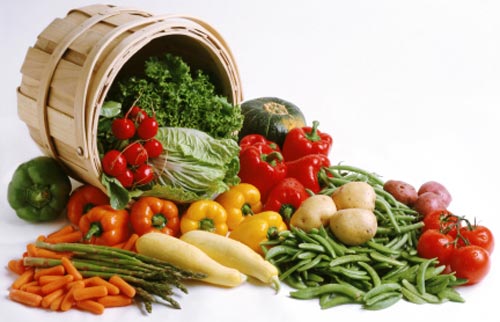
By Diana Herrington (www.realfoodforlife.com)
These foods look healthy but unless they are organic they have the highest levels of toxicity.
New to the top toxic spot, apples are susceptible to more than 30 insects and at least 10 diseases, and so are sprayed many times during the growing season. Fungicides and other chemicals are also added after picking to prevent tiny blemishes that can accumulate during storage of up to 9 months. Read the possible health benefits of apples at Apple Benefits.
2. Celery: “Nobody likes to find a caterpillar-damaged stalk in their celery bunch,” says Stuart Reitz, PhD, a research entomologist with the USDA.”
3. Sweet Bell Peppers: The creases in their crowns hold pesticides so they soak in. They also have less insect deterring compounds in them.
4. Peaches: Farmers may spray peaches every week or two from bloom to harvest—and peach fuzz can trap pesticides. The USDA Pesticide Data Program found 62 pesticide residues.
5. Strawberries: Are delicate and prone to disease, including fungal attacks that can turn them to mush during transit and storage. Millions of pounds of methyl bromide are used every year by California strawberry growers. It damages the ozone layer, so it is banned in many parts of the world. “This chemical has an uncanny ability to damage DNA, which creates a host of problems, ranging from reproductive effects to cancer and neurological damage,” explains Gina Solomon, MD, MPH, chief scientist at Natural Resources Defense Council. “Since the chemical is also highly volatile, it is easy for it to drift and affect workers and nearby communities.”
6. Nectarines: – imported are a genetic mutation of peaches so have the same weakness and “need’ the same support.
7. Grapes: To prevent that rot that easily happens, farmers spray aggressively with fungicides. The USDA Pesticide Data Program found 34 pesticide residues.
8. Spinach: Those green leaves are loved by grasshoppers and other insects and the plants themselves suck up chemicals from the soil, for example spinach has been shown to contain DDT from the soil which was banned over 10 years ago. You don’t want to just pass though on spinach though. It’s too healthy as you can read here. Spinach Health Benefits
9. Lettuce: Like spinach there are large surface areas to protect.
10. Cucumbers: Without spraying can be very delicate. The USDA Pesticide Data Program found 35 pesticide residues.
11. Blueberries: The berries are targets for insects such as blueberry maggots and bagworms.
12. Potatoes: are sprayed 5 or more times throughout the growing season to protect against various pests. After harvesting, another round of spraying occurs in the packing shed to ward off molds.
Extras on dangerous list:
13. Kale/collard greens: Like spinach and lettuce have large surface areas to absorb sprays.
14. Cherries: If just one of the western cherry maggots is found in a shipment, the entire load of fruit must be dumped so growers spray out of fear of losing their crops.
Thursday, July 26, 2012
Low-Fat Dairy & Whey Benefit Your Waistline. How?

Milk (and other low-fat dairy products) will help you build strong bones, but if you want to whittle your waistline and gain calorie-burning lean muscle you may need to up the ante. In a 2011 Journal of Nutrition study, dieters who ate 30 percent of calories from protein, including six to seven daily servings of dairy, chiseled off more belly and total fat—and gained more lean muscle—than women who trimmed the same number of calories but ate less protein and dairy. Researchers think the whey protein in dairy, which boasts the amino acid leucine, is particularly important in stimulating the formation of new muscle proteins.
Our new IsaLean Pro Shake (In a delicious vanilla flavor) has 35% protein. The highest quality whey is used in this gluten-free, organic shake.
Saturday, April 21, 2012
Don't throw out your Microwave just yet!!!

Sterilize sponges. Your dish sponge smells like last night’s dinner, and detergent won’t help. Time to toss it, right? Wrong. Pour a dash of white vinegar or lemon juice in a bowl of water, soak the sponge, and then heat it in the microwave on high for a minute. The heat will deodorize and disinfect the sponge—even after wiping up raw egg or chicken.
Clean the cutting board. How can you tell if you’ve washed the cutting board thoroughly enough after preparing raw meat? Eliminate the guesswork by sterilizing it in the microwave. Wash it first, rub it with lemon, then heat on high for one minute.
Soften sweeteners. Hardened brown sugar and crystallized honey don’t need to be thrown away, they just need to be heated. Sprinkle a bit of water into the brown sugar bag and heat the whole thing on high for 20 seconds. To return honey to its liquid form, remove the lid and heat the jar on medium for 30-60 seconds.
Speed up bread baking. Bread bakers know that yeast dough can take at least an hour to rise. Cut that time down to 15 minutes by proofing the dough in the microwave. Put the dough in a large bowl and cover with plastic wrap. Position a cup of water at the back of the microwave before placing the bowl inside. At a low temperature, heat for 3 minutes, pause for 3 minutes to let the dough rise, then heat for another 3 minutes. Allow the dough to rise for another 6 minutes or until it doubles in size.
Relieve aches and pains. Warm up gel or herb-filled heating pads to soothe sore heads and tummies, and to reinvigorate tired muscles.
Tuesday, April 3, 2012

Thursday, September 15, 2011
Six Doctors

The best six doctors anywhere
And no one can deny it
Are sunshine, water, rest, and air
Exercise and diet.
These six will gladly you attend
If only you are willing
Your mind they'll ease
Your will they'll mend
And charge you not a shilling.
And no one can deny it
Are sunshine, water, rest, and air
Exercise and diet.
These six will gladly you attend
If only you are willing
Your mind they'll ease
Your will they'll mend
And charge you not a shilling.
~Nursery rhyme quoted by Wayne Fields, What the River Knows, 1990
Sunday, June 19, 2011
The Benefits of Organic Food

Read more about "The Benefits of Organic Food" on the SparkPeople web site [Click Here].
Thursday, June 2, 2011
Safe, Natural, Homemade Vegetable Cleaner

Combine a cup each of water and white distilled vinegar in a spray bottle. Add two tablespoons of baking soda and one tablespoon of lemon juice. Use by first shaking, then spraying generously on your raw vegetables. Let sit for five minutes, rinse with water, then proceed with your cooking plans.
Tuesday, May 3, 2011
Why Cleansing is Essential for Weight Loss
________________________________________________________
I read this article on Suite101.com. It explains why I have been able to lose 100 pounds with my cleansing program. Those who know me know that I had all the odds stacked against me when it came to losing weight. I think I finally tapped into the secret, and this article explains what that secret is!! |
| Phoenix Rising |
________________________________________________________
Storage of Toxins in the Liver and Fat Tissue May Hinder Weight Loss By Victoria Anisman-Reiner, Suite 101.com
Toxic build-up can be the cause of weight gain and may interfere with conventional weight loss efforts. Cleansing draws out these toxins for a slimmer and healthier body.
If you haven't heard of cleansing, the concept may seem to contradict conventional approaches to weight loss. Cleansing approaches the body from a fundamentally different perspective than calorie-restricted diets. Instead of counting calories and eating less, a cleanse helps you to eat the right foods and supplements so your body can purge toxins and wastes that accumulate in organs (such as the liver) and in adipose tissue, or fat.
A New Paradigm for Weight Gain and Loss
The conventional understanding of weight gain and loss tell us that the body stores fat when it is fed excess calories, and breaks fat down for energy when food is scarce. According to this model, body weight is based on a person’s unique metabolic rate and how much they consume.
Holistic weight loss experts present an alternate model in which it is the chemical toxins in our food (pesticides, preservatives, MSG, artificial colors and flavorings, and artificial sweeteners)
Where Does the Human Body Store Toxins?
Our bodies are equipped with complex systems to drain toxins and metabolic wastes through the skin, kidneys, lungs, liver and colon. But with exposure to food additives, synthetic personal care products, and chemicals in our water and air, the human body can be overloaded with chemicals to detox.
Most of the toxic load which cannot be detoxified is stored in the liver (right at your midsection) or isolated from the body’s systems in additional adipose tissue, or fat.
Why Some Diets Work and Others Don’t
If weight gain is the body’s way of segregating toxins where they can’t harm the rest of your system, then it logically follows that a weight-loss diet that does not help the body to purge these stored toxins will only succeed temporarily.
Weight loss can’t last without some form of cleanse because the toxins that were stored in fat tissue circulate in the bloodstream and other systems of the body - causing headaches, fatigue, achiness, pain, dizziness, moodiness, and other withdrawal-type symptoms - until the body locks them away in new fat tissue.
For optimal functioning, the body wants to segregate whatever toxins it can’t remove - which is why people regain weight after most diets.
Cleansing For Healthy, Sustained Weight Loss
If you’re interested in clearing out the toxins polluting your body and achieving real, permanent weight loss, the following tips will help you in your next cleanse:
Stop eating or drinking diet products! “Diet” sodas, "sugar-free" snacks and most energy bars are loaded with artificial sweeteners and flavorings. In the long run, these only sabotage better health and a slimmer body.
Don’t eat white. White bread, white flour, and white sugar are bleached and heavily processed.
Likewise, stop eating artificial sweeteners. They may say "lo-cal," but they’re even worse for your health and weight than white sugar.
Don’t starve yourself. Starvation dieting only slows down metabolism.
Go organic. Non-organic fruits and vegetables (especially these worst offenders) only put more pesticides into your body.
Try adding more fresh lemons, uncooked virgin olive oil, virgin coconut oil, apple cider vinegar, goji or wolfberries to your diet, all of which promote healthy weight loss and cleansing.
Replace refined sugars with healthier sweeteners like agave and stevia, which balance blood sugar levels, support the pancreas, and do not promote weight gain.
Wednesday, April 27, 2011
Isagenix Products are Verified as Genetically Modified Free
Concerned about the nature of the food you eat and whether or not it has been genetically modifed through biotechnology?

Isagenix appreciates the right of customers to make informed dietary choices with the knowledge of whether or not the foods they purchase and consume contain any genetically modified (GM) ingredient.
The company also recognizes that uncertainty can exist in the marketplace centered around the labeling of GM ingredients despite consumer protections provided by governments such as those of Australia and New Zealand. For these reasons, the company is providing confirmation about the matter of GM ingredients and whether or not they are in Isagenix products.
This statement serves the interest of consumers in all markets (Australia, New Zealand, U.S., Canada, Hong Kong, and Taiwan) that Isagenix does not include any GM foods or ingredients in its products, nor does the company include any additives or processing aids in its products that contain any novel DNA or protein from a GM food.
In addition, Isagenix customers in Australia and New Zealand should be assured that all Isagenix products and their labels adhere to GM food labeling requirements and are in accordance with the Food Standards Code. All products can be claimed as “non-GM” or “GM free” in accordance with Australia and New Zealand regulations that prohibit representations about food that are false, misleading or deceptive.
The company ensures compliance to these standards through extensive manufacturing audits, raw material documentation, verification of origin and identification testing used in all of our products worldwide.
Thursday, April 7, 2011
Why is it Important to Detox Your Body?
In our modern environment, pollution and food processing has increased our toxic load considerably. Humans have added thousands of new chemicals that pollute our air and water. These toxins can often end up in our foods, not just in plants, but concentrated in the animals that we eat. Food is also laden with chemicals in form of pesticides, processing agents and artificial ingredients.
 |
| Diagram from http://www.dustyducts.com/ |
Continual flow of pollutants into water sources increases our risk of exposure to toxins.
As our bodies are endlessly exposed to toxins, the toxins can overwhelm the body’s natural detoxification defenses. A slow accumulation of toxins in our bodies may eventually disturb our natural processes.
It only adds to our toxic load when—in an age where portion sizes have grown out of proportion—we eat a lot more food than ever before. Most of the foods available are designed, not to support us nutritionally, but to appeal to the power of our taste buds. Our busy schedules have also made processed foods all the more convenient, adding to the waistline-expanding potential of sedentary lifestyles, and putting further burden on our bodies.
Human Body
The human body has had to adapt over the generations to removing varying toxic loads. Our bodies come equipped with powerful protections in forms of detoxification or cleansing systems. They are found throughout the body: in the stomach, the intestine, the liver and the kidneys.
The liver is a primary detoxification organ, metabolizing thousands of different chemicals we’re exposed to daily. Much of what we eat must pass through our livers. As the liver breaks nutrients down, it also metabolizes toxic substances. In most cases, these toxins are cleared from the blood, then eliminated through bile or urine. At other times, they can become stored in fat.
In addition, each individual cell contains its own inherent protections from the daily stresses of simply living. These include powerful detoxification and antioxidant enzymes, which help maintain cellular integrity so that the cell may function appropriately.
Thursday, March 24, 2011
Video from National Geographic: Safer Cleaning Solutions

National Geographic Video: Are you making a cleaner home or a dirtier environment?
Wednesday, March 23, 2011

Tuesday, March 22, 2011
Article: What's Holding Americans Back? by Gerald Celente
 |
| Picture from: thescienceblog.com |
The Pop-Tarts® and Egg McMuffins® washed down with Coke® for breakfast? The Baconator® Triple, The Whoppers®, The Big Macs®, the $5 Foot-Long Subs, the bucket-of-chicken and 32oz. Big Gulp®? Too many trips to the All-You-Can-Eat-Buffet or The Never Ending Pasta Bowl®? Or was it the Slurpees, tubs of ice cream, or boxes of donuts grabbed at the convenience store?
Could it have been the factory-farmed, battery-raised, hormone implanted, antibiotic-laced, pesticide sprayed, genetically modified beef, fish, chicken, eggs, dairy, vegetables, grains that were used in the highly processed, synthetic, ultra pasteurized, artificially sweetened, colored and flavored “product” passed off as food?
What drove a nation with a relatively well-off and well-educated population to inflict such suicidal behavior upon itself? It was easy to point to the poor for buying cheap and eating stupid. But what excused the smartest of the smart and the richest of the rich from buying cheap and eating stupid?
A case in point: celebrated for “powering his way through the day with a punishing Diet Coke regimen,” even Obama’s chief economic advisor – the always “brilliant” Larry Summers (who brilliantly jumped the sinking ship of state when his “brilliant” economic strategy to rescue America failed brilliantly) – was too stupid to eat smart.
A look around the cabinet, survey of Capital Hill, AMA, ABA, PTA or pow wow of American Indian chiefs proved he was not alone. America had become one big “Mike & Molly” sitcom. Yet, even though just about everybody knew better, just about everybody made the same excuse for abusing the body and deadening the mind: it was cheap and/or it was convenient.
Sure, money was tight and time was precious, but plenty of people were still going to the malls and spending big on hi-tech, high-end running shoes, taking vacations, eating out and buying new cars. Even low-end shoppers at Dollar Stores – while saving a buck – were filling their carts with junk snacks, junk soft drinks and junk “Made in China” bric-a-brac.
Or was it something in the polluted air and fluoride-treated water that deadened individual pride, courage, passion and self respect? Could it have been the quadzillions of tons of chemical mix poisoning the planet that made everyone susceptible?
Or could it have been the medicine chests full of Lipitor®, Oxycontin®, Xanax®, Celebrex®, Paxil® … or the Ritalin® force-fed to kids and gobbled down like M&Ms® that deadened heir minds or whacked them out? Whether prescribed indiscriminately as quick fix, symptom-relief solutions by legal “pushers” (a.k.a. doctors) or unwittingly washed down with a glass of municipally doctored “pharma-water,” voluntarily or involuntarily, a large segment of the populace was doing drugs.
Drugs Found in Drinking Water
A vast array of pharmaceuticals — including antibiotics, anti-convulsants, mood stabilizers and sex hormones — have been found in the drinking water supplies of at least 41 million Americans, an Associated Press investigation shows. (AP, 10 March 2008)
Or was it the “food for thought”? Could it have been the mind-numbing news served 24/7 by networks, cable and radio? All those know-it-alls — anchors, big mouths, blow-hards, clowns, pundits, experts, strategists, think tank wankers — telling audiences what to think, how to think and what to believe?
Food, pharmaceuticals, movies, music, TV, literature, art, fashion — down the line, across the board, from top to bottom, every sector was monopolized by the unholy trinity of Big Government, Big Business and Big Media.
The “American Century” — an age of opportunity characterized by the entrepreneur — had passed into history. America had been corporatized, homogenized, dumbed down and chained to the chains … and by the chains … restaurant chains, retail chains, movie chains, funeral home chains, auto-parts chains. They had cornered the market on everything they could get their hands on: tires, eye glasses, mufflers, dental care, banks, brokerages, drug stores, hardware, pet supplies.
Even in the mad rush of the monopolistic, oligopolistic, mega-maniacals to control the market place, there was room for the individual entrepreneur to flourish. In certain sectors, particularly retail and food, the quality conscious “Davids” — providing gourmet/unique products, tasteful ambience, impeccable service — could operate among the Goliaths.
If you were chained to a chain, you were chained. Working for a chain or patronizing a chain, there would be no real freedom until the chains were boycotted and finally broken. It would take a mass awakening; a quality revolution across the socioeconomic spectrum to bring down the gluttonous Goliaths.
Yet, in 2010, it was still neither welcome nor “politically correct” (itself an oxymoron since nothing “political” is “correct”) to tell Americans to look in the mirror to see what they had become; overweight, overstressed, overmedicated, under-motivated, slovenly dressed. A trip to Wal-Mart spoke a thousand words. The American psyche was reflected in the American physique.
Of all the Renaissance-related trends forecast by Gerald Celente and The Trends Research Institute, few could play a more powerful role in the creation of a new society than the upcoming Agrarian Revolution. From titillating the taste buds and nourishing the body, to providing the satisfaction of getting fit by working the land and living with — and from — nature, the trend would revivify Americans.
Besides providing millions of jobs and new entrepreneurial opportunities (especially for the young unemployed and the many unemployables) the Agrarian Revolution was a unique feature of the “American Renaissance.”
“Renaissance”! The word conjures up an image of the artistic and cultural ferment that began in 14th and 15th century Italy and subsequently spread across Europe. When asked what to do with his excesses of wealth, Cosimo de Medici’s answer was “create beauty.”
The “American Renaissance” that begins in the 21st century will not be initiated by excess wealth, but rather by pressing need. And it will have different distinguishing features, among them: the rebirth of food. For, finally, both the man in the street and the man in the ghetto would realize the life and death consequences of eating well; that, yes, “you are what you eat.”
Already in 2010, the seeds of change could be seen in the farmers’ markets, “buy local” movements, urban gardens and roof gardens that were sprouting up around the nation. Backyards and lawns that once grew nothing but grass were now growing food.
Regards,
Gerald Celente
for The Daily Reckoning
[Editor's Note: The above essay is excerpted from The Trends Journal, which is published by Gerald Celente. The Trends Journal distills the ongoing research of The Trends Research Institute into a concise, readily accessible form.]
Gerald Celente is founder and director of The Trends Research Institute, author of Trends 2000 and Trend Tracking (Warner Books), and publisher of The Trends Journal. He has been forecasting trends since 1980, and recently called “The Collapse of ’09.” Also a Close Combat practitioner and black belt trainer, Celente has made many media appearances including Oprah, CNN, The Today Show, Good Morning America, NBC Nightly News, C-Span, and CNBC. He has been cited in the Economist, Chicago Tribune, LA Times, Entrepreneur, USA Today, and many other publications.
Read more: What’s Holding Americans Back? [Article pulished in The Daily Reckoning online newsletter]
Subscribe to:
Posts (Atom)