About Me

My photo
Former teacher, clinical social worker and now entrepreneur. My focus, no matter what career I am engaged in, has been on helping people. Now I am on an incredible journey to change life in a leaner, cleaner, greener way. I hope you will join me in this transition.
Showing posts with label preparedness. Show all posts

Sunday, March 24, 2013

This might be a good kit to put together and toss into the back of your car in case of emergency from Prepping to Survive.

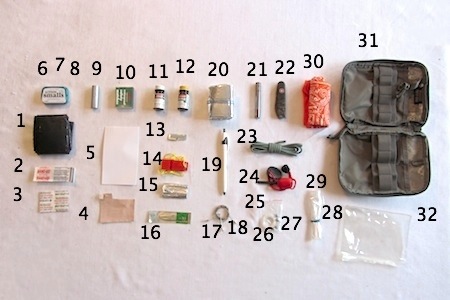
Making a 32-Piece Every Day Carry (EDC) Survival Kit

February 11, 2013
my edc
 
My wallet isn’t thick and it’s certainly not lined with credit cards, but I do carry something with me every day that is much more important than any piece of plastic from a financial institution. It’s my Every Day Carry (EDC) Survival Kit.

I put this kit together many years ago with one thought in mind: if I were to get stranded on the side of the road over night, if I were to get lost in the woods for a few days, if I were to not be able to make it home for any reason and had to spend the night without food or pre-made shelter, what would I want to have with me to make my stay more pleasant.

As I assembled the items, I wanted the kit to be lightweight and easy to carry. A heavy or cumbersome kit will most often get left behind and that defeats the purpose.

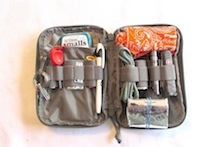
I started with a small Altoids tin but I quickly found some deficiencies with that container. Now I use a Maxpedition EDC Pocket Organizer. It works well despite being a little larger than I’d like.

Here’s what my EDC includes:
  1. Contractor yard bag
  2. 5 self-adhesive bandages
  3. 4 self-adhesive butterfly bandages
  4. Moleskin
  5. Index cards
  6. Cotton balls (inside the Altoids tin)
  7. Ibuprofen (inside the Altoids tin)
  8. Altoids Mini Tin
  9. Duct tape
  10. Waterproof matches
  11. Iodine tablets
  12. Iodine tablet neutralizer
  13. P-38 can opener
  14. Whistle
  15. Aluminum foil
  16. Sterile surgical blade
  17. Safety pins
  18. Snare wire
  19. Pen
  20. Emergency Thermal blanket
  21. Mag Lite Solitaire flashlight
  22. Swiss Army knife
  23. 10′ of paracord
  24. Firesteel
  25. Small fish hooks
  26. Split-shot fishing sinkers
  27. 50 feet of fishing line
  28. Rubber band (around the plastic bag)
  29. Resealable plastic bag
  30. Bandana
  31. Maxpedition EDC Pocket Organizer
  32. Resealable dry pouch
That’s what’s in my kit as of today. However, over the years, I’ve found that my kit is always a work in progress. I’ll find something else that may be of use to me in a survival situation and stuff it in the kit. As I learn new skills or grow in ability, I may remove other items.

my edc put together

In prior posts, I’ve written about the multiple uses or purposes of many of these items. For example, the yard bag can be used as make-shift rain gear, a water catch, a shelter covering, an insulated jacket, or a distress signal. Likewise a handkerchief or bandana has a bunch of uses for the survivor. You can find these posts in the Survival Kit category. I’ll continue to post about the other items.

I typically carry this kit in a backpack with other supplies including my first aid kit, some homemade MREs, a rain coat, a water bottle, metal cup, fixed-blade knife, etc. So, although this kit is designed to be self-contained, I do typically have some other items with me as well. I’ll post that list another time.

What am I missing? What do you carry?

Thursday, March 21, 2013

Meals in Jars plus Recipes

I saw this article on the Frugally Sustainable FB page. Even though she is concerned about food prices and shortages, I think these ideas would be terrific for camping trips and quicky dinners, too!

Meals in Jars

When I see news headlines like these…

U.S. Drought Driving Up Already Rising Food Prices While Economy Collapses! Get Prepared!
Drought means beef prices could rise
Multi-Billion Dollar Drought to Drive Beef Prices Up

…my first reaction is to freak out! It’s natural to experience feelings of fear and/or anxiety when reading news stories like this, right? But why, why would I waste one second of my life worrying about something I have no control over? You know what eases my fear: knowledge, preparedness, and a community of people that I trust.

About six months ago we began storing food. Buckets and buckets of organic beans, rice, quinoa, millet, oatmeal, popcorn, etc. now fill the once empty spaces of our closets. Given the access to water, we would be able to feed our immediate family and my parents (maybe even help out the neighbors) for about half a year. However, my thoughts lately are turning toward the possibility of using this food in the event prices of commodities were to increase, even more than they already have.

I’ve also been trying to organize what we do have and make it more practical for use. Today I began working on “meals in jars.” By combining beans, grains, dehydrated veggies/fruit from the garden, and seasonings I am attempting to ensure that we will have a supply of tasty and nutritious meals in the case of an emergency. Not to mention, it’s been a fun activity for the kids and I. It’s like canning beans and grains, but instead of using the pressure cooker all we do is place an oxygen absorber in the jar (smile).

There are thousands of different recipes you could follow when creating your meals in jars. Just remember to combine items that take approximately the same amount of time to cook. For example, do not intermix pasta with navy beans. The pasta will cook much quicker than the beans.
For an abundance of recipes to use as a foundation for your meals in jars look on this forum. Below I have also provided you with a few of the recipes we put together today.

Apple Cinnamon Oatmeal (1 pint jar)
-1 cup oatmeal
-1 tsp cinnamon
-1/4 cup sliced almonds
-1/4 cup dehydrated apples
*2 cups water necessary to reconsitute

Vegetable Millet (1 pint jar)
-1 cup millet
-1/4 cup dehydrated mixed veggies
-1/4 cup dried parsley
-1 tsp dehydrated minced garlic
-1 tsp salt
*3 cups of water necessary to reconsitute

Quinoa and Lentil Soup (1 quart jar)
-1 ½ cup quinoa
-1 ½ cup red lentils
-1/2 cup dehydrated veggies
-1/4 cup dehydrated onion
-1 tsp minced garlic
-1 tsp salt
-2 bay leaves
*5 cups of water necessary to reconsitute

Lemon Dill Rice (1 pint jar)
-1 cup rice
-1/2 tsp dried dill
-1 ½ tsp dehydrated lemon peel
-1/2 tsp salt
*2 cups of water necessary to reconsitute

For each recipe, layer ingredients in order as listed. Use the size jar as indicated. Place an oxygen absorber on top and then close lid. Store jars in a safe place. Keep off shelves.

Storage Tips

-The best way to store beans, grains, and dehydrated veggies/fruit is in a sealed mylar bag along with oxygen absorbers. The individual meals could then be stored in a 5-gallon bucket. Lightweight, takes up less space, it’s just a much better option. So, I’ll continue saving for the supplies required for this system of storage.

I recommend purchasing mylar bags, oxygen absorbers, and heat sealers from the fine folks over at Preparing Wisely and SorbentSystems.com who sell Made-in-America products.

Monday, January 21, 2013

Growing Fruits & Veggies for Your Freezer


The avid vegetable growers on my gardening email list have noted that alas, despite trying to plan well, their freezers and pantries are almost bare despite the fact that there's still snow on the garden. We're fortunate to live in times with well-stocked grocery stores.
We're also lucky to live with reliable electricity. I know how to can and make preserves, but the freezer is still the easiest way I know how to easily capture garden produce at their peak. I keep a baking pan in my freezer and bring in surplus I've picked that I won't use today and after washing, spread the beans, peas, corn, cherries or strawberries on the baking pan for a kind of home flash freeze. Later when I have time, I bag up the frozen item to protect them from freezer burn. Easy and fresh. And despite what all the books tell us, we've had really good luck with freezing produce without blanching it first.
Suggestions on what items are good for freezing:
Tomatoes of course....Sauce or diced, roasted or stewed. We agree tomatoes are the most versatile item in your freezer.
Prepared meals:  ratatouilles, bean stews, chilis, lasagnas, stuffed peppers.  Who isn't delighted to find a home-grown, home-cooked meal in the freezer on a cold January evening ready to thaw and eat.
Individual vegetables, loose.  Here I take inspiration from the freezer section of the grocery and make small Ziploc bags of everything the grocery store freezer section supplies:  beans, corn, peas, okra, black-eyed peas, baby limas, cauliflower, broccoli, Brussels sprouts, red and yellow peppers. Basically anything that would make a quick side vegetable to balance out a meal or something to give a soup or stock some extra zip. One great suggestion I'll try this year is to freeze poblano peppers whole ready for stuffing.
Pre-cooked foods.
Here's where I've learned that pre-cooking some foods turns ordinary vegetables sublime.  Frozen cut spinach isn't too impressive, but frozen spinach previously braised in olive oil and garlic is sublime.  Likewise, braised mixed kale with a splash of tamari is welcome.  A great way to freeze these greens is  to lay them on freezer paper in a long thin log and wrap them up.  Cut off a section of what you need and return the log to the freezer.
Cooked and seasoned beans.  I love green beans fresh but there's something about them frozen plainly that is unimpressive.  But I like heartier beans like broad beans that have been cooked and seasoned. 
Potatoes. I'm still experimenting with potatoes, but I'm so crazy for mashed potatoes that frozen individual servings of mashed potatoes with a little gravy disappeared by December.  The texture wasn't as great as fresh...but they're still mashed potatoes!  Shredded potatoes for hash browns are pretty good too.
Roasted eggplant slices....ready to go for lasagna.
Baby beets, well-cooked and seasoned.
Stir-fry mixes of favorite vegetables pre-cooked to almost doneness.
Fruit.
You can't make enough of this. Keep trying, but whether dried or frozen, cherries, raspberries and peaches just disappear.  There's still applesauce and a few strawberries in my freezer and some dried cherries I didn't see.  Freeze more next year!
Now that my freezer is almost empty, I know how to plan for this year's garden.  Plant more of the foods that disappeared by December and fewer of the foods that are still frozen from year before last.
Article by Sandy Swegel
Photo Credits: http://survivingthemiddleclasscrash.wordpress.com/category/food-storage/
http://www2.fiskars.com/Gardening-and-Yard-Care/Projects/Garden-to-Table/Canning-Freezing/Freeze-It-Quick-Tips-for-Freezing-Your-Garden-Produce#.UP1smyfAeSo

Monday, November 5, 2012

Stocking Up for Emergencies? -- Here's Some Ideas

There were a lot of people laughing at the “preppers” prior to the terrible thrashing by Hurricane Sandy on the East Coast and New England, but who is laughing now?  Many people think that preppers are “end of the world” fanatics … in truth, with all the uncertainty in our world today it is SMART to prepare for anything – weather, terrorist, power outages, unemployment, sun flares -- because most people could not survive even two weeks if something disrupted their routine lives.
If you are in the process of stocking up for the future, or you have just decided you better start, Natural News recommends the following seven food that are nutrient-dense and worth stocking up on for long-term storage.
 1) Raw almonds, almond butter.  When vacuum-sealed in dry form, raw almonds can be stored for many months in the refrigerator or freezer, providing you with instant access to one of the best plant-based sources of protein, healthy fats, and immune-boosting nutrients.
Almond butter is an excellent long-term survival food as well, as vacuum-sealed jars of almond butter can last on the shelf for nine months or even longer, and for up to three months after being opened.
2) Brown rice.  For long-term storage foods, beans and rice probably come to mind, as both of these foods last an incredibly long time when stored dry. Brown rice provides exceptional nourishment and when stored in dry-sealed containers it stays fresh for around five years.
3) Chia, hemp, and other "superfood" seeds.  Organic seeds such as chia and hemp will last several years on the shelf.  Chia seeds, in particular, are loaded with complete protein, omega-3 fatty acids, and lots of vitamins and minerals along with other nutrients.  If you add these seeds to water or other liquids it will maximize the seeds bioavailability.
4) Fresh, unwashed farm eggs. Why unwashed? Fresh, unwashed eggs obtained from local farms or your own chicken coop, have an outer coating that will actually protect the egg and keep them fresh for up to a year if stored in a refrigerator, and three months when stored at room temperature.
5) Carrots. Store your carrots unwashed and covered with sand or mulch and they can be stored for five to six months if put in a dark, cool, well-ventilated area.  They can also be stored in a freezer for up to a year when peeled, cut and blanched.
6) Apples. Like carrots, apples can be stored for many months as well, if properly prepared. Tart, thick-skinned, unwashed apple varieties can last for many months when wrapped individually in newspaper and stored in cardboard boxes. Apples, as well as a host of other fruits, can also be cut up, dried, and vacuum-sealed for long-term storage.
7) Quinoa. Quinoa stored in dried form will last for 25 years or more.  It has about 14 percent protein content, and an essential amino acid profile.  Quinoa is considered a complete food.
To Learn more: http://www.naturalnews.com/037832_superfoods_stockpiling_survival.html#ixzz2BOjnkNMp